
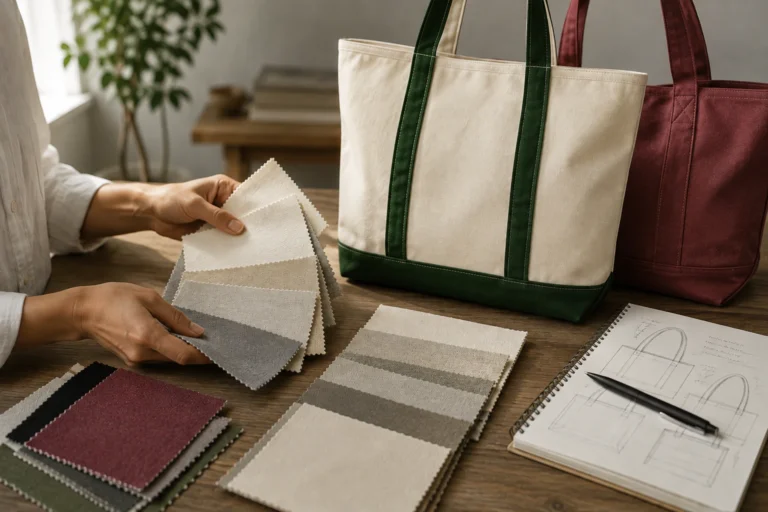
Choosing canvas sounds simple until several fabric options are placed in front of you. Cotton, cotton-polyester, recycled cotton, and polyester can all be used for tote bags, but they do not give the same result. For a brand or buyer developing a custom tote, the difficult part is knowing what actually changes between them and which material makes more sense for the product.
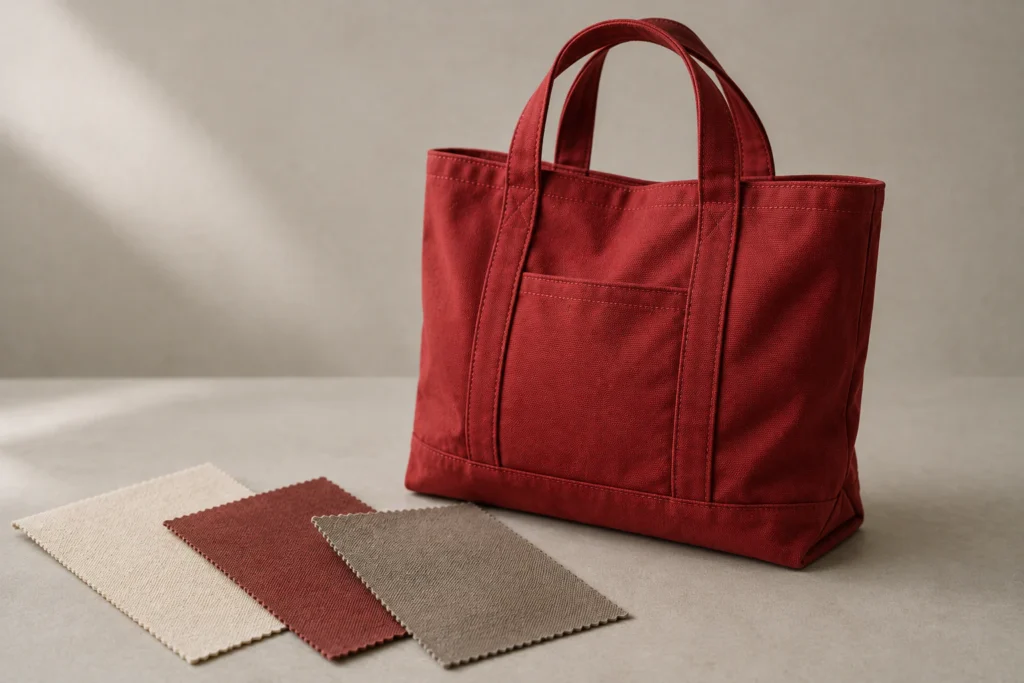
Main Canvas Materials Used for Tote Bags
Most canvas tote projects can start by comparing four material directions: 100% cotton canvas, cotton-polyester canvas, recycled cotton canvas, and polyester canvas.
Cotton canvas is the familiar option and is often the first material considered for shopping, promotional, and retail totes. Cotton-polyester canvas can look or feel noticeably different even when the bag design stays the same.
Recycled cotton usually enters the discussion when recycled content is already part of the product requirement. It should not be treated as an automatic replacement for regular cotton, because the actual composition and fabric appearance can differ.
Polyester canvas is another regular option, not simply a material for beach or outdoor bags. Its surface and hand feel can be quite different from cotton-based canvas, which is why it is worth judging as a material in its own right.
The material name gives you a starting point. The real comparison begins when the fabrics are placed next to each other.
Canvas Material Comparison — Composition and Approval Checks
| Material label | Composition / classification | Surface & hand feel | Moisture note | Confirm before approval |
| 100% Cotton Canvas | 100% cotton | Visible woven texture; can range from soft to firm | Untreated cotton is not automatically water resistant | Actual surface, hand feel and shade |
| Cotton-Polyester Canvas | Cotton + polyester; blend ratio varies | May look smoother or more even; result varies by fabric | Depends on the actual finish | Blend ratio plus the physical fabric sample |
| Recycled Cotton Canvas | Recycled cotton; may be blended with recycled polyester or other fibers | Surface, shade and hand feel may differ from regular cotton | Depends on the final composition and finish | Actual recycled-fiber composition and fabric appearance |
| Polyester Canvas | Polyester-based canvas | Different surface and hand feel from cotton-based canvas; finish can change appearance | Polyester alone does not mean waterproof | Finish or coating when water resistance is required |
| Duck Canvas | Duck describes canvas construction, not a fiber by itself | Usually tighter and more compact; can feel more substantial | Depends on its fiber composition and finish | Fiber composition plus the actual duck construction |
When Cotton Canvas Is a Good Fit
Cotton canvas is a common starting point for shopping, promotional, and retail totes. The woven texture is easy to see, especially on natural canvas, and it gives the bag the familiar fabric look used on many shopping, promotional, and retail totes.
There can still be quite a lot of difference between cotton canvases.
Some are soft and easy to fold. Others feel noticeably firmer in the hand. The surface can be different too. One fabric may show more yarn texture, while another looks cleaner even though both are listed as 100% cotton.
For a tote that needs this more traditional canvas look, cotton is a sensible material to check first. It also leaves plenty of room to choose between softer or firmer fabrics without changing the fiber itself.
We suggest looking at the actual cotton before approving it from the specification. If the first option feels too soft, too coarse, or simply does not look right for the tote, another cotton canvas may already give a better result.
Cotton Canvas and Cotton-Polyester Canvas
Cotton is what many buyers already have in mind when they ask for a canvas tote. Natural cotton shows the woven texture clearly, and that familiar fabric look works well for many shopping, promotional, and retail bags.
But “100% cotton” still covers quite a wide range of fabrics. Some cotton canvas is soft enough to fold easily. Some feels much firmer. Even the surface can look different from one fabric to another.
A cotton-polyester canvas can be quite close to cotton when you first see it. Put the two together and the differences are easier to notice. One may have a cleaner surface, while the cotton beside it shows more of the yarn texture. In another pair, the difference may be much smaller.
The blend ratio is useful information, but it does not tell you exactly what the fabric will feel like. Two cotton-polyester canvases with a similar composition can still look different.
For a traditional canvas look, cotton is usually a sensible place to start. If the available cotton feels too rough, too soft, or simply does not suit the product reference, we suggest putting a cotton-polyester option beside it and looking at both fabrics together.
There is no need to change to a blend just because it is available. If the cotton already gives the tote the right look and feel, it may already be the better choice.
Regular Cotton vs. Recycled Cotton
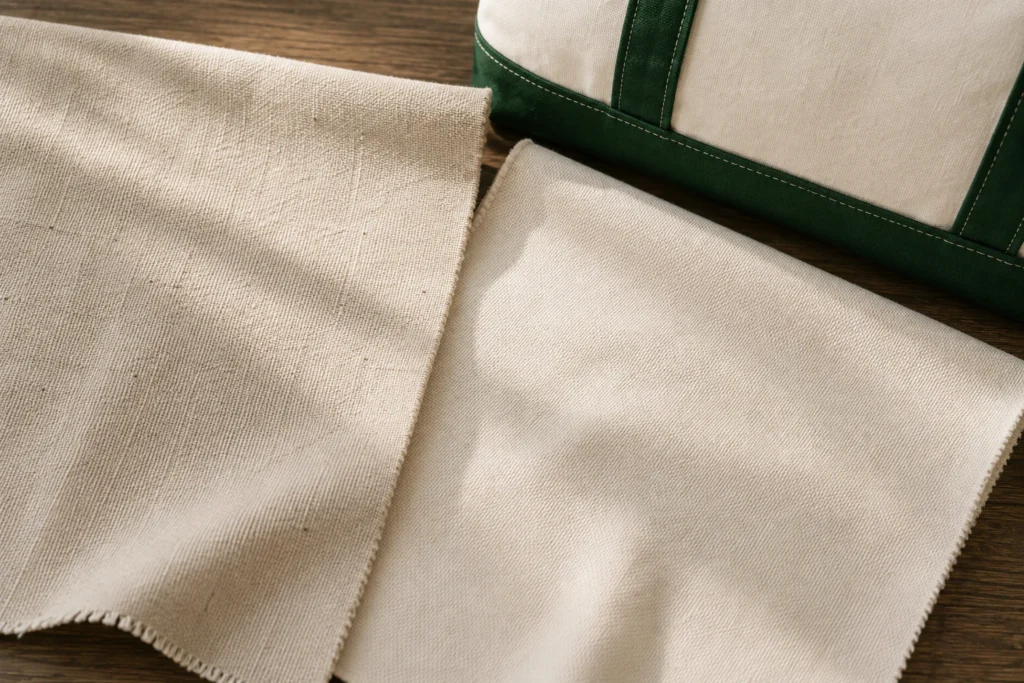
If recycled content is part of the product brief, recycled cotton should be looked at early rather than treated as a last-minute substitute for regular cotton.
The actual fabric may not look exactly the same. Depending on the material, recycled cotton can show a different surface, shade, or hand feel from the regular cotton canvas beside it. Sometimes the difference is small. On another fabric, it can be much easier to notice.
The name “recycled canvas” also needs a closer look. It does not always mean 100% recycled cotton. Some fabrics use recycled cotton together with recycled polyester or other fibers.
We recommend checking the actual fiber composition before approving the material, especially when recycled content is part of the product requirement.
If an existing tote is being changed from regular cotton to recycled cotton, compare the new fabric with the original one instead of treating it as a direct replacement. The recycled option may still work well for the same design, but the surface and overall appearance should be checked again.
Polyester Canvas for Tote Bags
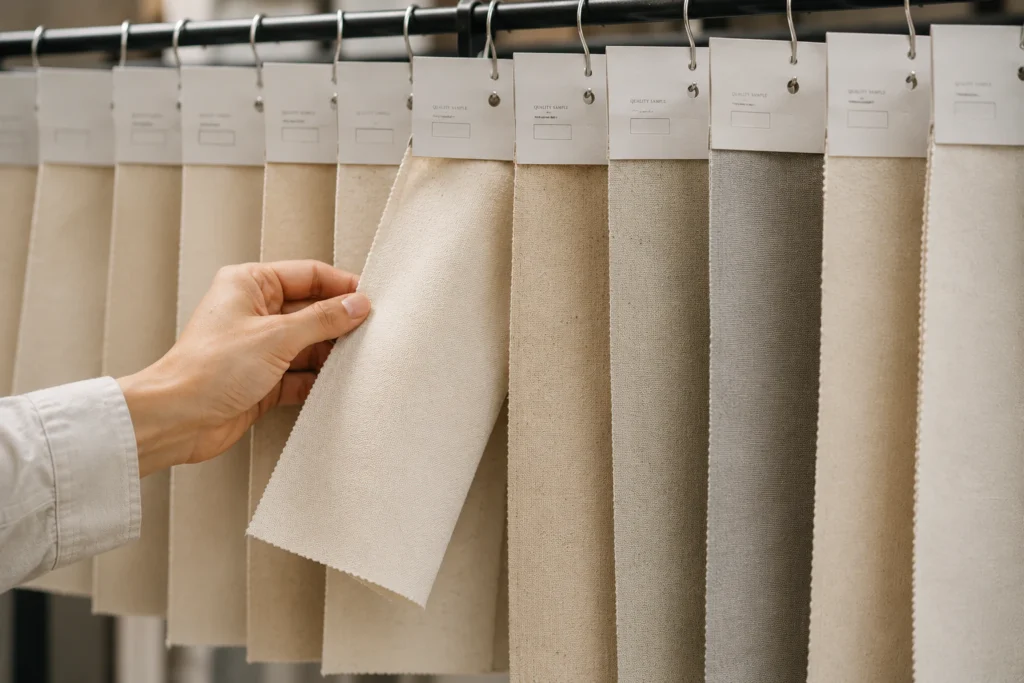
Polyester canvas is sometimes treated as a material mainly for beach bags or outdoor totes. In practice, it can also be used for regular shopping, promotional, and retail bags.
The first difference is often the fabric itself. Polyester canvas can have a different surface and hand feel from cotton-based canvas, and some finishes give it a cleaner or more uniform appearance. Whether that suits the tote depends on the look the product is meant to have.
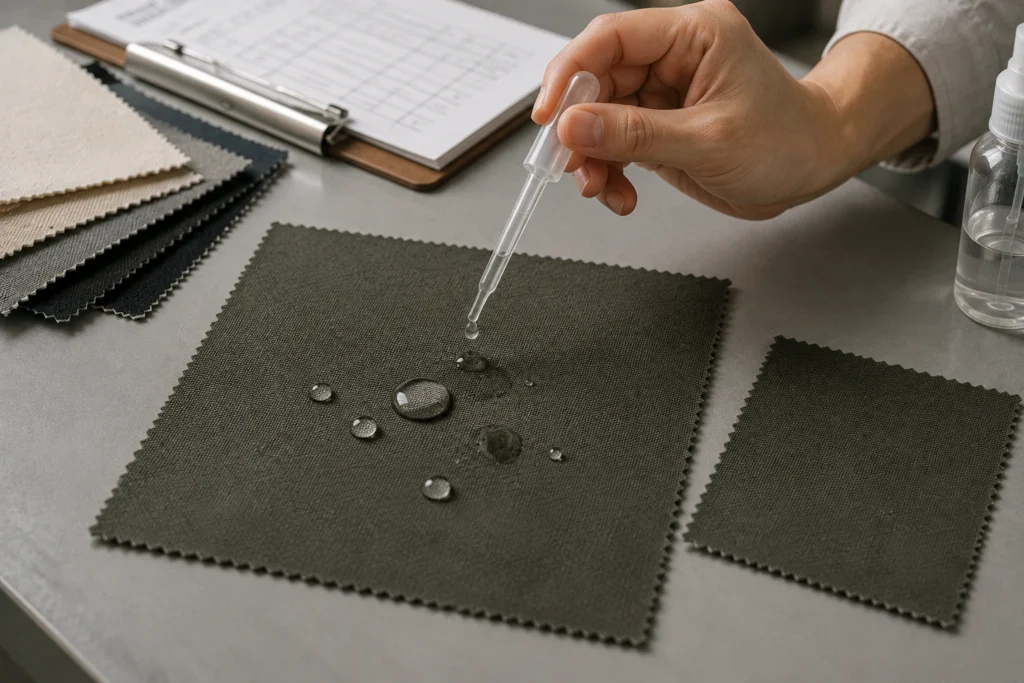
Moisture is another reason polyester may be considered, but the fiber name should not be confused with water resistance. A polyester canvas is not automatically waterproof.
If the bag needs a particular level of protection from water, we recommend checking the actual finish or coating rather than relying on the word “polyester” in the specification.
For some projects, cotton will still give the more suitable canvas look. For others, polyester simply matches the required surface, feel, or performance better. It should be compared as a normal material option rather than saved only for outdoor use.
Cotton Canvas and Duck Canvas
Duck canvas is often listed beside cotton canvas, which can make the two sound like completely different materials. They are not quite the same kind of classification.
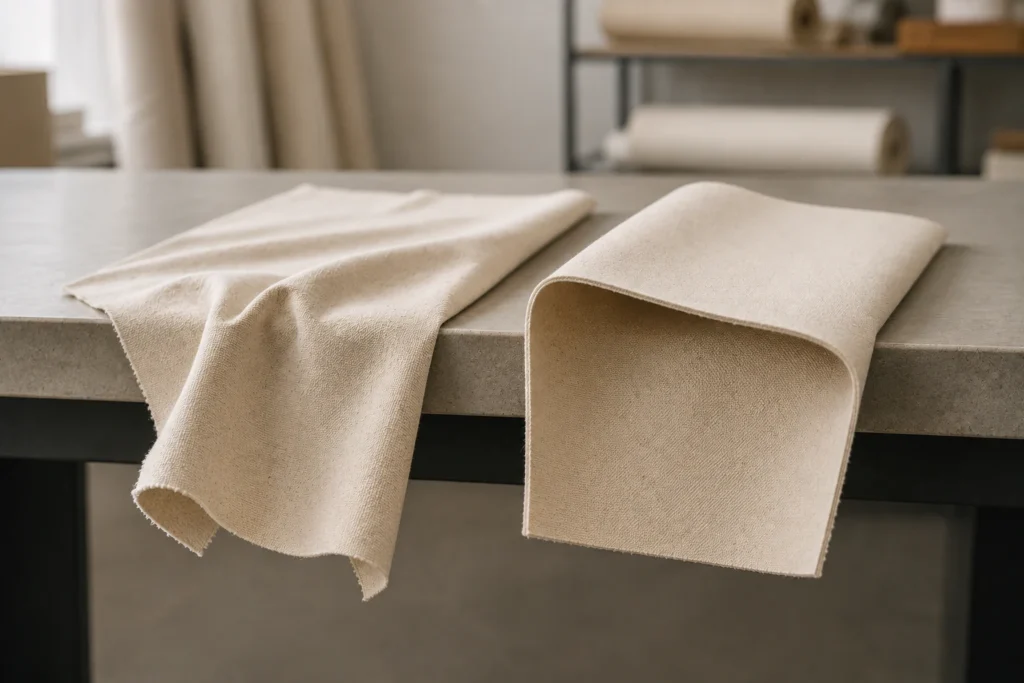
Cotton describes the fiber used in the fabric. Duck refers more to the way the canvas is woven and constructed. A cotton duck canvas can still be 100% cotton.
Compared with a looser canvas, duck canvas usually has a tighter, more compact surface and can feel more substantial in the hand. That makes it useful when the tote needs a denser canvas look or a fabric with more body.
We suggest checking both the fiber composition and the actual fabric description when “duck canvas” appears on a material list. The word duck alone does not tell you whether the fabric is cotton, a blend, or another fiber.
Which Canvas Material Should You Choose?
For most shopping, promotional, and retail totes, start with cotton canvas. It gives the familiar canvas look and is available in enough different surfaces and hand feels to cover many standard tote bag projects.
Choose recycled cotton canvas from the beginning when recycled content is already part of the product requirement. It is better to select the recycled material early than develop the tote in regular cotton and replace it later.
Compare cotton-polyester canvas when the available cotton does not give the surface or feel you want. A blend is not automatically better than cotton, but it may be a better match for the product.
Use polyester canvas when the project calls for a synthetic canvas, a different material feel, or performance that makes polyester the more suitable direction. For water resistance, the coating or finish still needs to be confirmed separately.
When two materials both seem suitable, compare the actual fabrics and choose the one that comes closer to the look and feel you want for the finished tote.
A Few Questions About Choosing Canvas
Do I Need to Decide on One Canvas Material Before Sampling?
No. If two materials both look suitable, it is reasonable to keep both in the comparison first. Seeing the actual fabrics may already make the choice much easier before a complete tote sample is made.
Can the Same Tote Design Be Made in Different Canvas Materials?
Usually, yes. A tote developed in cotton may also be possible in a cotton-polyester blend, recycled cotton, or polyester.
The design may stay the same, but the finished bag does not have to feel or look identical after the material changes. That is why a material change should be treated as part of the product decision, not only as a different line on the specification.
Is a Higher Cotton Percentage Better for a Tote Bag?
Not necessarily. The fiber percentage tells you what the fabric is made from, but it does not tell you exactly how the canvas will look or feel. A cotton-polyester blend with less cotton may still suit the tote better than a 100% cotton option if the actual fabric gives the result you want.
Working on a Custom Canvas Tote?
If you already have a tote design, product photo, existing sample, or reference link, you do not need to decide on the exact canvas before starting.
Annabelle Bag works with different canvas options for OEM and private label tote bag projects. Send us your reference and tell us what you want the finished bag to look and feel like. We can compare suitable materials with the design and confirm the final choice through sampling before bulk production.
Have a tote bag project in mind? Send us your design or reference to get started.