
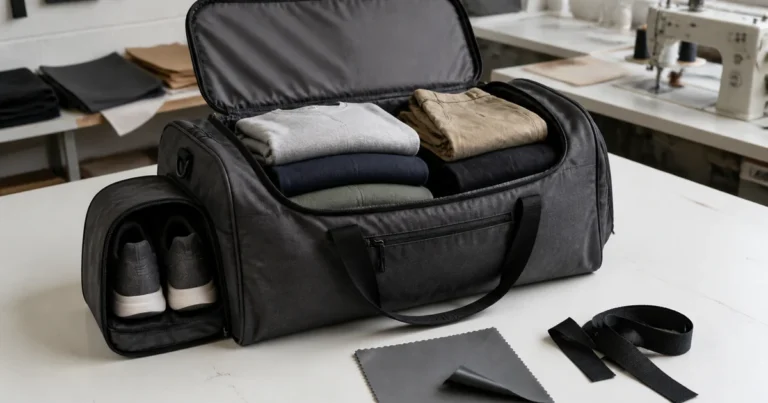
This project looked ready for sampling. The buyer had front and side 3D renderings, an outside size of about 50 × 26 × 26 cm, 600D polyester with PU backing, and a separate side shoe compartment. The basic specification was clear, but several construction details were still open.
The renderings showed an empty bag. They could not show how much room the shoe compartment would use once a pair of shoes was inside. The drawings also left the opening and the support under the base untested. Those questions became clear when we made and loaded the first sample.
Intended Load
For this project, the useful starting point was the intended load. The bag was meant to carry shoes and clothing. The buyer had not asked for extra dividers or a wet and dry compartment, so those features were outside the sample brief.
One detail could not stay open: the largest shoe size. A side shoe compartment that works for a smaller shoe may take a very different amount of space when it has to hold a larger one. The outside measurements alone do not answer that question.
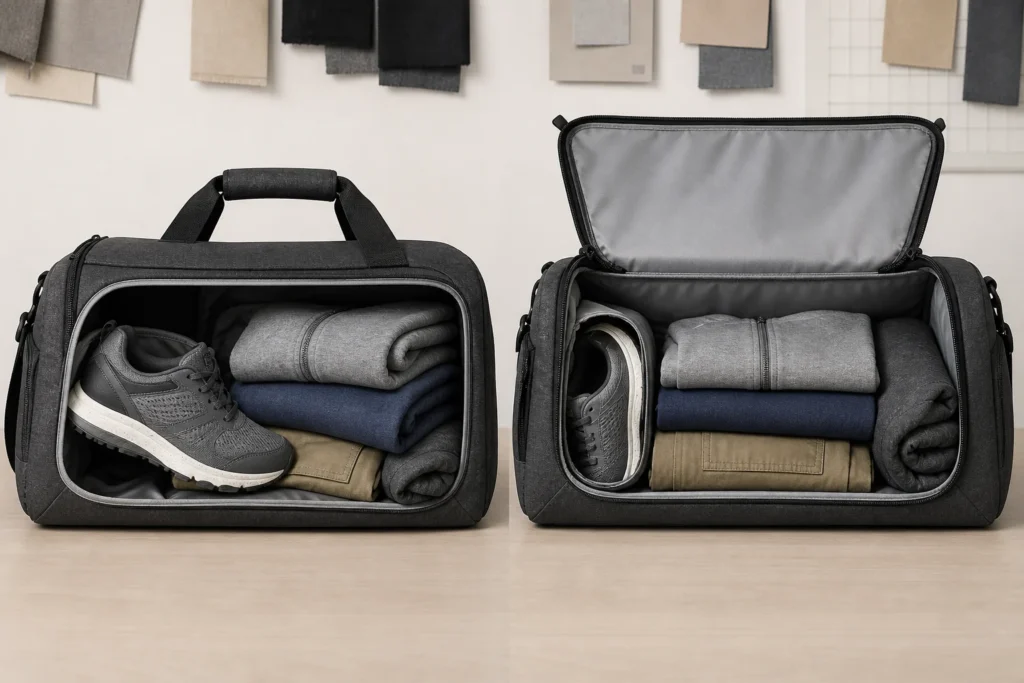
The agreed check was one pair of EU 43 athletic shoes, three sweatshirts and two pairs of pants. That gave the sample room a real load to test.
Sample Brief Snapshot
| Detail | Confirmed for This Sample |
| Outside size | Approximately 50 × 26 × 26 cm |
| Outer material | 600D polyester with PU backing |
| Loading check | One pair of EU 43 athletic shoes, three sweatshirts and two pairs of pants |
| Shoe storage | Separate side shoe compartment |
| Additional internal features | No added wet/dry bag or internal divider in this loading requirement |
| Logo handoff | Finished size, application method and distance from relevant panel seams |
The measurements and load above belong to one anonymous sample and do not define a universal capacity or performance standard.
Shoe Compartment and Main Compartment
The first sample looked good on the table. It had been filled with paper to check the shape and appearance. We then removed the paper and loaded the items agreed with the buyer.
The EU 43 shoes fit into the side compartment, but the shoe pouch pushed well into the main body. The clothes still went in. They did not lie flat, though. The clothes had to be rolled and fitted around the space taken by the shoes.
Top Opening
The first version used a straight zipper across the top.
With the clothes and shoes inside, the zipper felt tight near both end corners. Reaching the pants at the bottom also meant pushing a hand past the zipper teeth. The items fitted inside, but access to the bottom was difficult.
For the second sample, we changed the top to a broad U-shaped opening. With the same shoes and clothing inside, it was easier to reach the bottom corners. The zipper also moved around the corners without the sideways pull seen on the first sample.
600D Polyester and Internal Support
The original material note said 600D polyester with PU backing, and we kept that material direction. In the sample room, we still had to check the actual outer fabric, lining and support in the base.
For this bag, the base construction and the handle webbing became more important after the first loading check.
Handle Webbing and Base Support
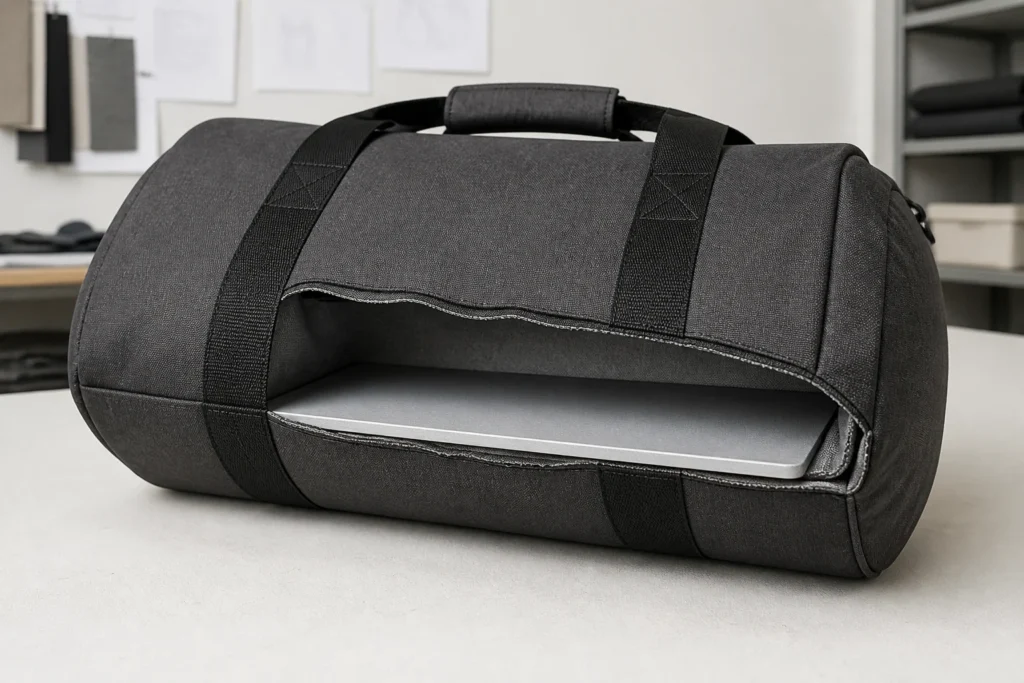
When we lifted the first sample, the shoe side dropped and the middle of the base bent. The handle webbing ended at the side panels, so it did not support the bottom of the loaded bag.
On the second sample, we ran the webbing down the sides and underneath the base. The base stayed level when the bag was lifted from one side, and the body no longer folded through the middle.
The result belongs to this sample and this load. It is not a general load rating for other duffel bags.
Logo Position
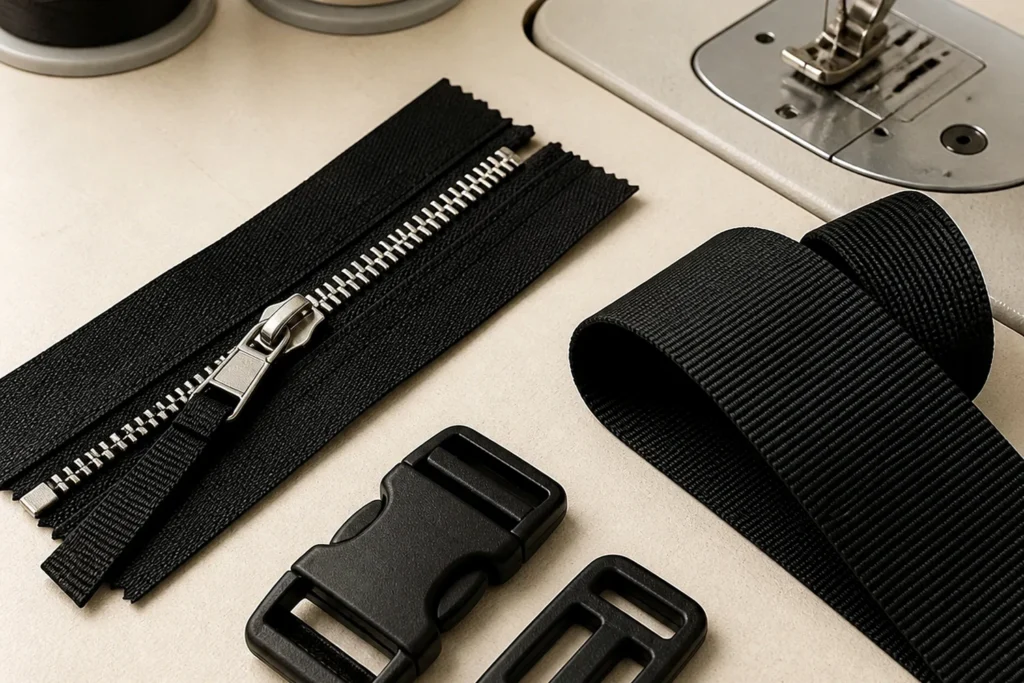
The buyer’s logo also had to be checked on the real bag. Seams, edge binding and the zipper line could leave less usable space than the rendering suggested.
We checked the logo position against the actual panel and the nearby construction lines. The sample brief included the finished logo size, application method and distance from the relevant seams.
Second Sample Approval
We used the same load for the second sample: one pair of EU 43 athletic shoes, three sweatshirts and two pairs of pants. The revised shoe pouch sat closer to the side when empty. After the shoes were loaded, the clothes could lie flat.
The U-shaped opening gave access to the bottom corners, and the zipper did not show the same strain as the straight opening. The webbing underneath the base also kept the bag level when lifted.
What Changed Between the Two Samples
| Area | First Sample | Second Sample |
| Shoe compartment | With the stated load, the shoe tunnel occupied an estimated 35–40% of usable space. Clothing was harder to place flat. | A looser, collapsible PU-coated 210D nylon lining sat closer to the side when empty; two metal mesh ventilation eyelets were added. Clothing lay flat under the repeated load. |
| Top opening | The straight top zipper became stiff near the end corners, and clothing at the bottom was harder to reach. | A U-shaped double-zip lid opened more easily around the adjusted corners and improved access under the same load. |
| Base and handles | The single-layer base had no supporting board or webbing underneath. The loaded bag sagged toward the shoe side. | Webbing continued under the base with box-X reinforcement, and a removable 1.5 mm soft PE base board was added. The bag stayed more balanced in the second check. |
This comparison describes one anonymous sample with the stated load. It does not establish a load rating, durability result, warranty or general construction rule.
Annabelle Bag’s sample-room and development team reviewed the second sample with the buyer’s team. The buyer approved the revised opening, the shoe-compartment liner, the webbing construction under the base, and the 600D polyester with PU backing used for this sample.
The approval covered this anonymous sample with the stated items. It was not a production order or a general performance claim for every duffel made with 600D polyester.
Current Sample Brief
After a revision, the buyer and the sample room should be looking at the same version. For this project, the current sheet needed the retained 50 × 26 × 26 cm size and the 600D polyester with PU backing. It also needed the U-shaped opening, the webbing route under the base, the intended load and the logo position measured from the actual panel seams.
After the revision, the approved details were kept in one working brief instead of being split across renderings, reference photos and messages. This reduced the chance of an earlier version being used for the next sample.
、f you are preparing a custom duffel bag sample, review our custom travel and duffel bag options, then send us the reference, target dimensions, intended load and the details that must stay. We can help organize those decisions into one working brief before the sample room starts cutting.
Frequently Asked Questions About Custom Duffel Bag Samples
How should I choose the shoe-compartment size for a custom duffel?
Use the largest shoe the finished bag is expected to hold, then test it inside the physical sample. The check should cover more than whether the shoe fits: look at the space left in the main compartment and whether the rest of the load is still easy to pack and remove.
Is a U-shaped opening always better than a straight zipper?
No. The useful opening depends on the load, the bag proportions and the access the buyer expects. In this anonymous sample, the U-shaped opening worked better with the stated shoes and clothing. That result does not make it the right construction for every duffel.
Does 600D polyester determine how stiff the finished bag will be?
No. The actual fabric, backing, lining, foam and base support all affect how the finished bag feels and holds its shape. A buyer comparing two 600D options should review the physical swatches and the complete material construction rather than relying on the denier label alone.
Does one approved sample cover later material, logo or construction changes?
Only the version represented by the approved sample and its current brief is covered. If the fabric, backing, opening, webbing route or logo position changes, record the revision clearly and decide whether the changed area needs another sample check before production approval.
What should I send before a supplier starts the first duffel sample?
Send the reference images or drawings, finished dimensions, intended load, required compartments, material direction, logo artwork and the details that cannot change. If some decisions are still open, mark them as open instead of letting an older message or rendering appear to be the final instruction.
Before the Sample Room Starts Cutting
The first sample became useful when we stopped judging it on the table and loaded it with the items the buyer actually planned to carry. That one check exposed the space taken by the shoe compartment, the limits of the straight opening and the unsupported base.
If you are preparing a custom duffel bag sample, send us the reference, target dimensions, intended load and the details that must stay. We can help organize those decisions into one working brief before the sample room starts cutting.