
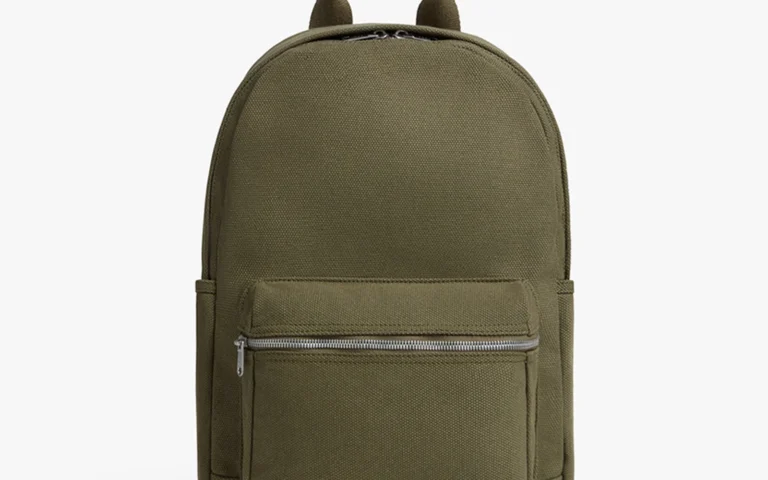
A corporate backpack can be well made and still be wrong for the program. A bag developed for employees who carry laptops every day may be unnecessarily complex for a two-day conference, while a lightweight event backpack may not suit a field team that uses it throughout the working week.
For buyers, the difficulty is that “corporate backpack” describes a business application, not a finished specification.
This guide explains how the program, contents, usage frequency, branding, distribution and reorder plans should shape the backpack before sampling and bulk production begin.
A corporate backpack specification should be built around the program’s contents, frequency of use, branding, distribution and reorder needs—not around a fixed list of “business backpack” features.
Start With the Program, Not With a Standard Corporate Backpack
Corporate backpack projects often begin with a reference image.
That can establish the general appearance, but two buyers can send almost identical references while expecting completely different finished products.
One project may be an employee onboarding program where the backpack needs to carry a laptop, charger and documents several days a week. Another may be a conference order where attendees receive a notebook, brochure, bottle and several promotional items.
A field-sales team may open and carry the bag repeatedly during the working day. A recurring employee program may need the same specification again months later.
Those differences should influence the product before details such as extra pockets or padding are added.
Program → contents → frequency of use → specification
A padded laptop compartment only creates value when device carry is genuinely part of the program. Additional organizer pockets are useful when there are specific items to organize. Reinforcement, foam and hardware should solve a use problem rather than appear simply because they are common on business backpacks.
The goal is not to remove features for the sake of reducing cost. It is to make sure each feature has a reason to remain in the specification.
Employee Onboarding Backpacks Need to Work After the Welcome Day
For an onboarding program, the useful question is what happens after the employee receives the backpack.
If it becomes part of the employee’s regular commute, it should be developed as an everyday work bag rather than as packaging for a welcome kit.
The intended contents are the starting point.
A typical program might include a laptop, charger, notebook, access card, bottle and several personal accessories. If the company issues a laptop, the device size should influence the sleeve rather than relying on a generic “laptop compartment.”
Internal organization should follow the same logic.
A few clearly assigned spaces for cables, cards or documents can be more useful than a dense organizer panel filled with narrow pockets. Adding storage that does not correspond to a real item can consume usable space without improving the bag.
Daily carry also changes where structure matters.
Shoulder straps, the back panel, top handle and major load-bearing points deserve more attention when the backpack is used several times a week. The entire bag does not need to become heavily padded, but repeated carrying justifies investment in the parts the employee actually feels and uses.
Daily Use Changes the Branding Decision
An onboarding backpack is company merchandise, but employees may carry it on public transport, during business travel or outside working hours.
Very large branding can make a daily-use backpack feel more like event merchandise.
A restrained logo direction may increase the chance that the backpack continues to be used after onboarding.
The first branding question is therefore not whether to use embroidery, printing or a patch.
How visible should the company identity be when the backpack becomes part of the employee’s everyday carry?
The production method can be selected after the desired level of visibility and placement are clear.
A Custom Commuter Backpack is one practical starting direction for this type of project because the laptop area, organizer storage, straps, back panel and branding can all be adjusted around the program.
Conference and Event Backpacks Have a Different Cost Logic
A conference backpack may be ordered in a large quantity, but that does not mean it should copy the construction of an everyday commuter bag.
Its contents may be much simpler: brochures, notebooks, event schedules, bottles, samples, sponsor materials or promotional gifts.
If those are the real contents, a heavily padded laptop section or complex organizer may add material, sewing and internal bulk without improving the attendee’s experience.
For this guide, it is useful to think of this as a feature budget: the amount of product complexity the program can justify.
A conference project may gain more value from a straightforward main compartment, convenient front access, useful bottle storage and efficient distribution than from multiple specialized internal sections.
Weak shoulder-strap connections, poor access or inadequate structure still create problems. The aim is to put product complexity where it supports the actual event.
As order volume increases, an unnecessary detail is simply repeated across more units. Early specification discipline therefore becomes increasingly important.
Field and Sales Team Backpacks Need to Survive Repeated Handling
A field or sales team may use a backpack very differently from an employee who mainly travels between home and an office.
The bag can move between vehicles, airports, client sites, temporary workspaces and outdoor locations. It may be opened more frequently and loaded less carefully.
Quick-access storage can therefore become more valuable.
A front section for documents, chargers or small equipment may solve a real daily problem. Bottle storage can matter when employees spend long periods away from a desk. Handles, straps and other load-bearing areas may receive more repeated stress.
The actual working environment should decide how far the specification moves in this direction.
A sales representative carrying a laptop, catalogues and chargers has different requirements from a technical team carrying small tools or test equipment. Both may be described internally as corporate backpack projects, but the loads are not the same.
A field-team sample should therefore be checked with representative contents.
Soft paper filling can make almost any backpack look balanced. A laptop, power adapter or rigid equipment case can change how the bag hangs, where weight concentrates and how easily pockets remain accessible.
For these programs, durability and access often deserve more attention than presentation features that are mainly visible on the first day.
Recurring Employee Programs Need a Specification That Can Be Repeated
A one-time event order can effectively end when the final cartons are delivered.
A recurring employee program has another requirement: the product may need to be reproduced.
New hires may receive the same backpack throughout the year. Different offices may request additional quantities. The company may reorder the same design for the next onboarding cycle.
That makes repeatability part of the product specification.
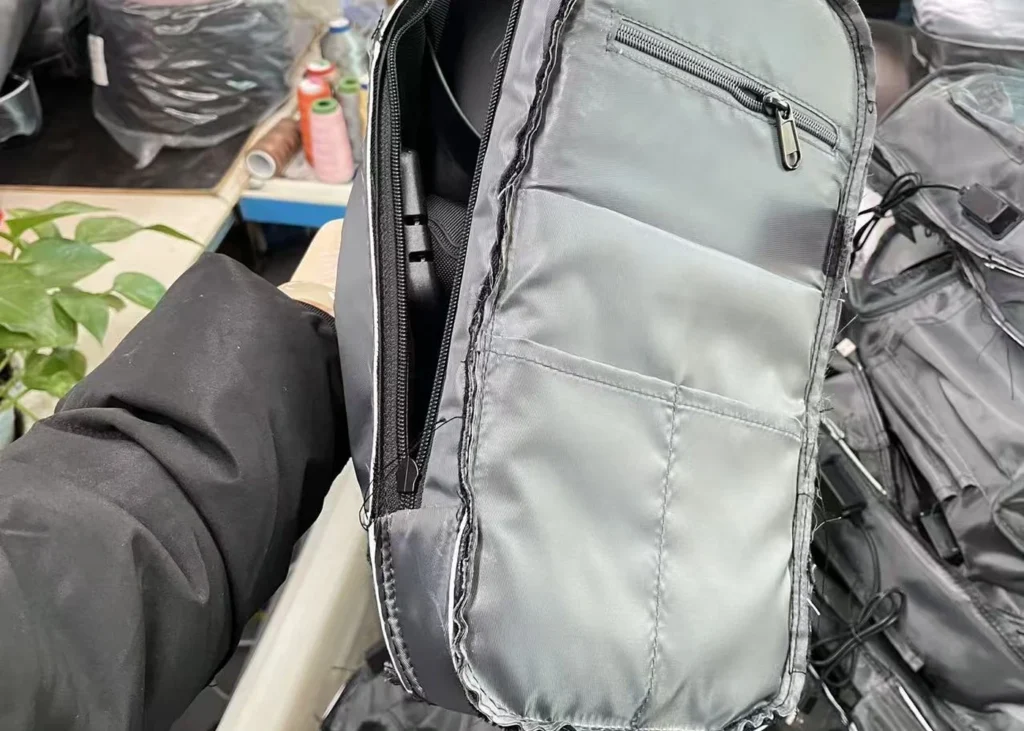
The first approved backpack may use a fabric, zipper, webbing color and hardware combination that works perfectly at the time of development. If those elements are unusually difficult to source later, the reorder can become more complicated than the first production run.
Long-running programs should therefore distinguish between details that are essential to the identity of the product and those that can remain flexible.
A distinctive logo component may be critical. An unusual hidden buckle may not be.
Color also needs control. If the company expects later batches to remain close to the original appearance, the relevant color and material references should be retained instead of depending on a general description such as “navy blue.”
The approved sample becomes particularly important here.
It provides a physical reference for the fabric, shape, padding, hardware, branding and overall appearance. Supporting specifications and packing instructions help future production teams understand what created the approved result.
For recurring corporate programs, repeatability is part of the product specification.
This is especially important when the goal is not simply to place one large order, but to maintain the same employee product over time.
Build a Feature Budget Before Adding More Features
Corporate backpack specifications often grow during development.
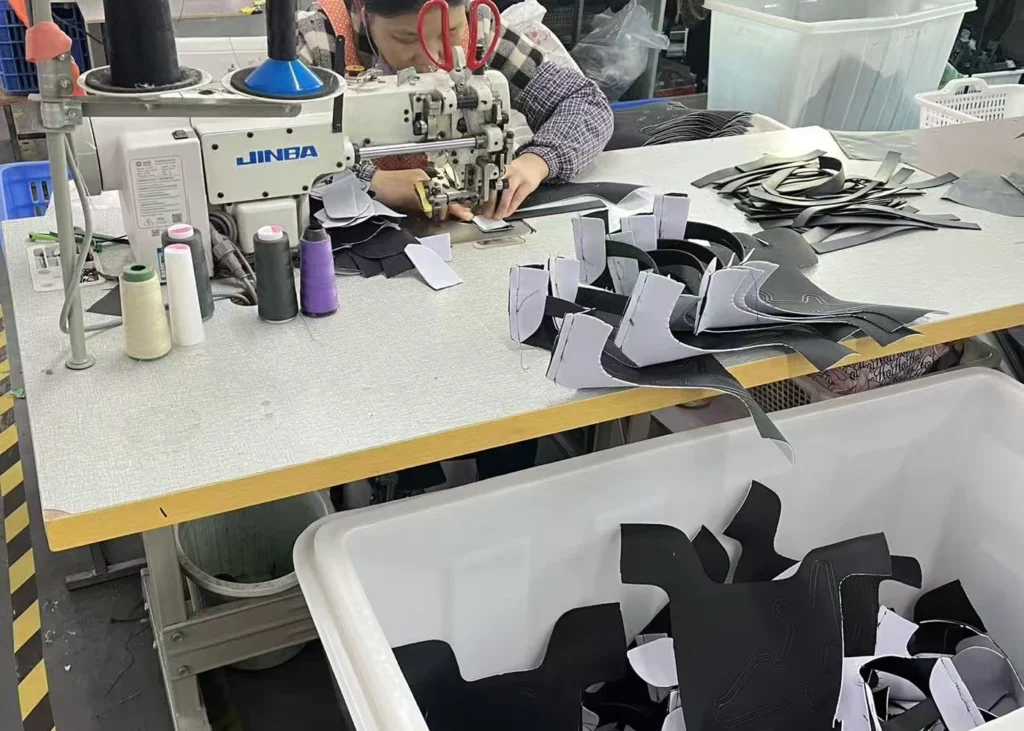
A simple laptop sleeve becomes a heavily padded compartment. A front pocket becomes a layered organizer. Then a hidden pocket, trolley strap, key hook, additional buckle or extra reinforcement is added.
Each feature may have a valid use somewhere.
The problem begins when features are added because they are familiar rather than because the corporate program requires them.
A feature budget keeps recurring unit cost and product complexity focused on functions the program will actually use.
| Corporate program | Features often worth prioritizing | Features that may need stronger justification |
| Employee onboarding | Laptop protection, carrying comfort, practical organization | Oversized branding, excessive internal divisions |
| Conference / event | Accessible storage, branding visibility, easy distribution | Heavy padding, complex organizers |
| Field / sales team | Reinforcement, quick access, practical pockets | Presentation-focused details |
| Recurring employee program | Repeatable materials, stable components, controlled specification | Difficult-to-source custom hardware |
These are starting points rather than fixed rules.
An event backpack may genuinely need laptop protection. A field-team project may require individual presentation packing. The table is useful because it forces the feature back to the original program requirement.
What problem in this program does the feature solve?
If the answer is unclear, the detail deserves another review before it becomes part of every unit.
Match Branding Visibility to How the Backpack Will Be Used
Corporate branding is often discussed mainly as a production method.
Visibility should be decided first.
A backpack used every day by employees enters far more situations than a bag distributed at a conference. A small or restrained logo may suit a commuter backpack because the employee is expected to continue carrying it outside the office.
A conference program may deliberately need more visible front-panel branding because exposure is part of the event.
Field teams present another case. Their company identity may need to be recognizable during client visits or work activity rather than primarily promotional.
The design question is therefore:
How much branding should the user carry in the situations where the backpack will actually be used?
Once the visibility and placement are established, the backpack logo methods can be evaluated separately against the fabric, artwork and manufacturing requirements.
Plan Packing Around Distribution, Not Only Shipment
Packing decisions should begin with the final recipient, not only the export carton.
Consider an onboarding program. Each backpack may eventually be combined with a notebook, welcome letter, access information or other company items.
A conference program works differently. Hundreds of bags may need to move quickly through a registration or event-distribution area.
A multi-office company may want quantities divided by city, department or color. A phased employee rollout may require cartons that can be identified and released separately instead of opening and sorting a mixed shipment.
The useful question is:
How will the backpack move from arrival to the person who receives it?
That answer can influence individual packing, barcodes, labels, carton marks and quantity allocation.
Keep Variants Under Control
A total quantity does not show the full production complexity of a corporate backpack program.
One specification in one color is different from the same total quantity divided among several colors, departments, offices or logo versions.
Each variation creates another detail that has to remain correct through sampling, production, inspection and packing.
Variation can still be useful. Color coding may identify departments. Different logos may be required for regional offices.
The important part is making each variant intentional.
If several versions exist only because different stakeholders preferred different options during development, reducing the number of variants can make both the first production run and later reorders easier to control.
The First Sample Should Prove the Program, Not Just the Sewing
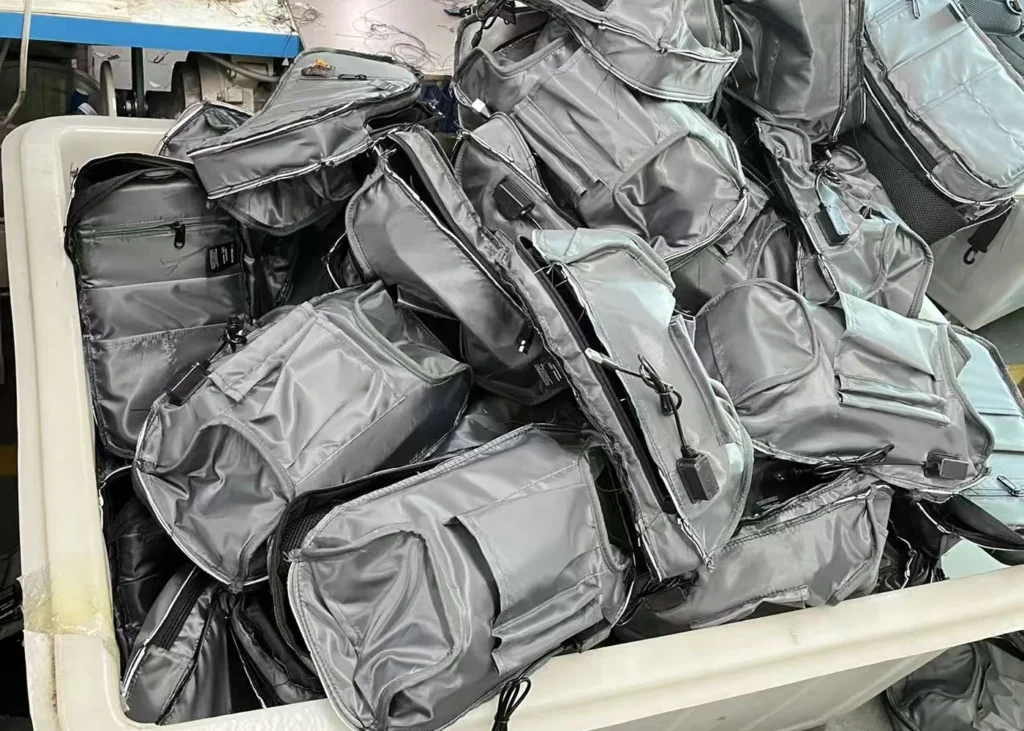
A finished sample can look clean and still be wrong for the corporate program.
An onboarding sample should be checked with the intended laptop and normal daily accessories.
A conference backpack should be packed with the materials attendees are expected to receive.
A field-team sample should be evaluated with a realistic working load.
Branding should also be viewed at a normal carrying distance rather than only in a close-up product photo. Packing should be checked against the actual distribution plan if the program depends on individual kits, labels or location-specific cartons.
Workmanship remains part of sample approval, but the sample has another job:
The sample should prove that the specification matches the program.
If approval only confirms appearance, practical problems may remain hidden until the backpacks are already being distributed or used.
Illustrative Example: A Recurring Employee Onboarding Program
Consider a company developing one backpack for a recurring employee onboarding program.
Employees receive a laptop, charger, notebook and access card. The backpack is expected to continue into normal commuting after onboarding, the company prefers understated branding, and later reorders are likely.
Those requirements begin to define the product.
Laptop storage becomes important because device carry is part of the program. Internal organization can focus on the charger and a few daily accessories rather than a large organizer panel.
The carrying system deserves more attention because employees will use the backpack repeatedly.
Branding can remain controlled because the bag is intended to move beyond the office.
Material and hardware decisions should also consider whether a similar specification can be sourced again. Highly unusual components may be appropriate when they are essential to the brand, but they should be chosen deliberately when future production is expected.
Packing can then be standardized so later batches arrive in the same basic format.
This is an illustrative example rather than a fixed corporate-backpack formula.
The specification comes from the program—not from the word “corporate.”
Corporate Backpack Development Should Start With the Use Case
Corporate backpack projects become easier to control when “corporate” is treated as a use category rather than a standard product specification.
Employee onboarding, conferences, field teams and recurring programs place different demands on the same basic backpack format.
A useful sequence is:
Program → contents → usage frequency → feature budget → branding → distribution → reorder requirements
Only then does it make sense to lock the final product specification.
For brands and corporate buyers developing custom backpacks, Annabelle Bag can review a reference design together with the intended contents, use case, branding direction, packing requirements and expected order structure before the sample is finalized.
The objective is not to add every feature associated with a business backpack.
It is to build the features the program will actually use.
Frequently Asked Questions
What is a corporate backpack?
A corporate backpack is a backpack developed, selected or branded for a company program such as employee onboarding, conferences, field teams, corporate merchandise, client gifts or partner programs. The term describes the business application rather than one fixed backpack structure.
What should a corporate backpack include?
There is no universal feature list. The specification should follow the contents, usage frequency and program requirements. A daily employee backpack may benefit from laptop protection and carrying support, while a conference backpack may need simpler storage and easier distribution.
Should a corporate backpack have a laptop compartment?
Only when laptop carry is genuinely part of the intended use. A padded laptop section can be valuable for employee commuting or field work, but it also uses internal space and adds product complexity. Programs where recipients are not expected to carry computers may benefit more from a simpler layout.
How visible should a company logo be on an employee backpack?
Branding visibility should match the way the backpack will be used. A daily employee backpack may suit more restrained branding, while an event program may deliberately require a more visible logo. The desired visibility and placement should be decided before choosing the logo production method.
Can the same corporate backpack be reordered later?
Yes, but repeat orders are easier when the original specification is controlled clearly. Material references, colors, hardware, branding, approved samples and packing instructions should be retained. If future reorders are expected, component availability and specification repeatability should be considered during the first development cycle.