
Many backpack inquiries start with a product photo and an estimated quantity. However, this information is usually not enough to prepare a reliable quotation.
Before discussing the price, we normally need to understand where the backpack will be sold, whether it is for a short promotion or a regular product range, and how the order will be divided between colors, versions and packing requirements.
These details help define the right construction and customization options before sampling starts.
Start with the retail plan
Many supermarket backpack projects look simple at the beginning. When we receive this type of inquiry, the first question is usually not about adding more pockets or changing materials. We first need to understand whether the backpack is for a short-term promotion or a regular product line.
The intended user and daily use also influence the backpack design. A detailed market report is not necessary at this stage. A simple description of the customer group and what the backpack needs to carry is usually enough to guide decisions about size, compartments and shoulder straps.
A promotional backpack usually has a fixed selling period and a target price for a specific campaign. A backpack that will remain in the product range may need to match other items for a longer sales cycle and support future reorders.
The two bags may look almost identical in a reference photo, but the production requirements can be different.
The target retail price and buying budget usually determine how the backpack should be developed. Additional pockets, heavier fabric, branded components or individual retail packing may all be possible. However, adding every requested feature to one basic backpack can move the product away from the intended price range.
This is why the requirements need to be reviewed together before sampling.
When comparing quotations, make sure the suppliers are pricing the same requirements. A unit price without the requested labels or individual packing cannot be directly compared with another quotation that includes them.
A meaningful comparison is only possible when the product details and packing scope are clearly defined.
The total quantity is only the starting point. A large order can become several smaller production quantities after it is divided by style, color, store label, barcode or packing version. The quantity for each version is what matters when reviewing fabric colors, logo processes and packing arrangements.
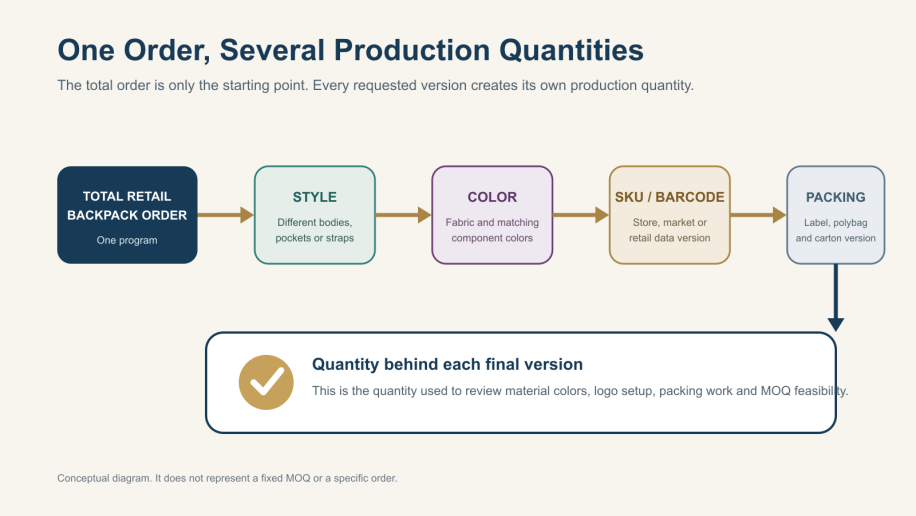
The final quantity split may not always be available during the first inquiry. In that case, provide the total quantity and the versions you are considering. The remaining details can stay open until the quotation and sampling requirements are confirmed.
Explain what matters in the reference
Most backpack inquiries start with a photo, product link or existing sample. These references give both sides something specific to discuss, but they do not always explain why the buyer selected that design.
The key point may be the overall shape, the front pocket, the carrying function or simply the available space for a logo.
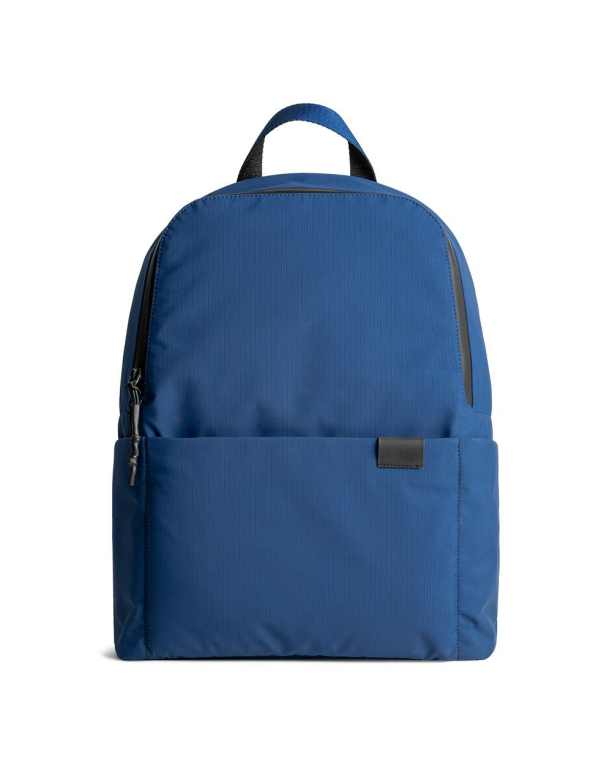
A short note attached to the reference can save a lot of unnecessary discussion. For example, explain which parts should stay close to the original design and which parts can be changed. If the lining, inside pocket or strap construction can be adjusted, mention this as well. A complete technical package is not required for the first conversation.
Even a simple backpack still requires several basic decisions. Confirm the approximate dimensions, capacity, pocket layout, closure method and shoulder strap requirements.
Also clarify whether lining or reinforcement is needed. These details affect the actual performance of the backpack, even when the outside appearance remains simple.
The buying budget needs to accompany the reference. A photograph cannot confirm the fabric backing, the amount of padding or the zipper specification. If a particular material or zipper brand is required, that requirement should be written down. If another suitable option can be considered, the supplier needs to know that as well.
Sometimes the requested construction already fits the budget. In other cases, the outside appearance can stay while an internal detail changes. The quotation should identify the difference before a sample is made. If two specifications are suitable, the buyer can compare them and choose which one should move forward.
Choose a customization route that fits the quantity
Annabelle Bag does not keep ready-made backpacks for these programs. An existing style is a construction that can be used as a starting point. It is not a finished stock bag waiting for a logo. The material, color, logo and packing are confirmed for each order.
When an existing construction already suits the retail plan, the buyer may only need to confirm the order details and add a logo. The size, pocket layout and straps do not have to be redesigned. This can be a practical route for a simple supermarket backpack, provided that the quantity works for the selected material, colors and logo process.
An existing style can also be modified. The body shape may be suitable while the size, front pocket or shoulder straps need to change. Material and packing changes can be reviewed at the same time. The buyer should identify the parts that must stay and the parts that may change. A request to “make it similar but cheaper” is difficult to evaluate unless the supplier also knows the target price and where a compromise is acceptable.
Full custom development is used when an existing construction cannot produce the intended bag. A photo, sketch or written description can start the discussion. Dimensions, materials, components, functions and packing still need to be converted into an agreed sample standard before bulk production.
Quantity has more influence on this route. New material sourcing, custom components and additional sample work may not be practical for a very small order. When the volume is sufficient, the supplier can review the backpack as a complete production program. The buyer does not need to choose the route before making contact. The available quantity and the required changes will help determine it.
Specify materials, components and colors
A material name gives the supplier a direction, but it is not a complete specification. For example, 600D polyester does not identify the backing, finish, feel or exact color. If the fabric must match an existing product, send a physical reference or confirm an approved swatch.
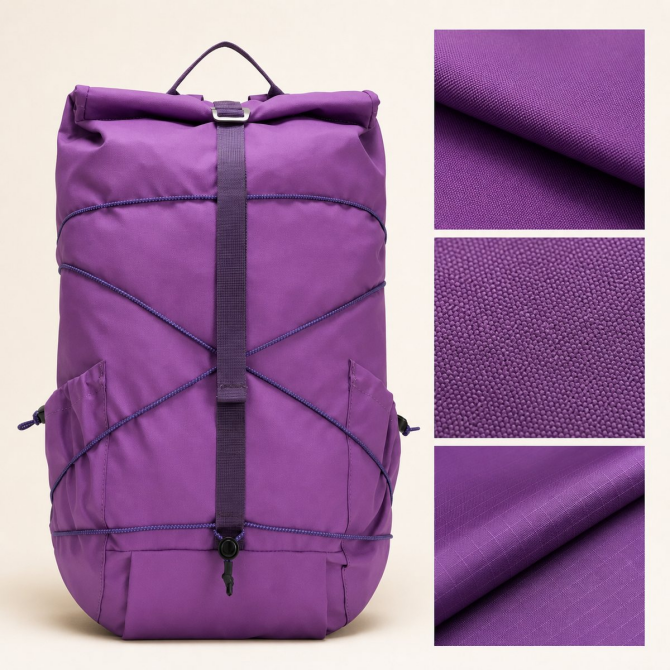
Zippers and other components need the same clarity. If the backpack must use SBS or YKK zippers, write the brand into the request. If a suitable alternative is acceptable, state that instead. Buckles, adjusters and webbing can also affect sourcing when the buyer requests a custom color or shape.
Logo artwork has to work on the actual backpack panel. Its size and position should be checked against seams, zippers and the texture of the fabric. The decoration method can then be reviewed against the material, artwork and order quantity.
Color needs its own quantity plan. Before the sample is approved, the buyer should show how many units are expected in each color. This allows the supplier to check the fabric, matching components and logo arrangement for the versions that will enter production.
Treat retail labels and packing as part of the product
One backpack style can become several retail SKUs. Each color may have a different barcode and quantity. A chain may also request different labels, price tickets or carton marks for different stores or markets. The backpack construction may be unchanged, but the packing work is not.
An assortment sheet helps keep those versions separate. It can list the product reference, color, SKU, barcode and quantity for each version. Information that has not been approved should be marked as pending. A temporary barcode should never enter bulk production as if it were final data.
Annabelle Bag can support hangtags, barcodes, labels, individual packing and other retail packing when the requirements are provided early enough for review. The buyer needs to provide or approve the artwork, barcode data and retailer instructions. Those files need a clear approval record.
If each backpack needs an individual polybag, specify how the bag should close and where the label or retailer warning should appear. Confirm the number of backpacks per carton and the required carton marks as well. These details affect packing, counting and the final handover to the logistics team.
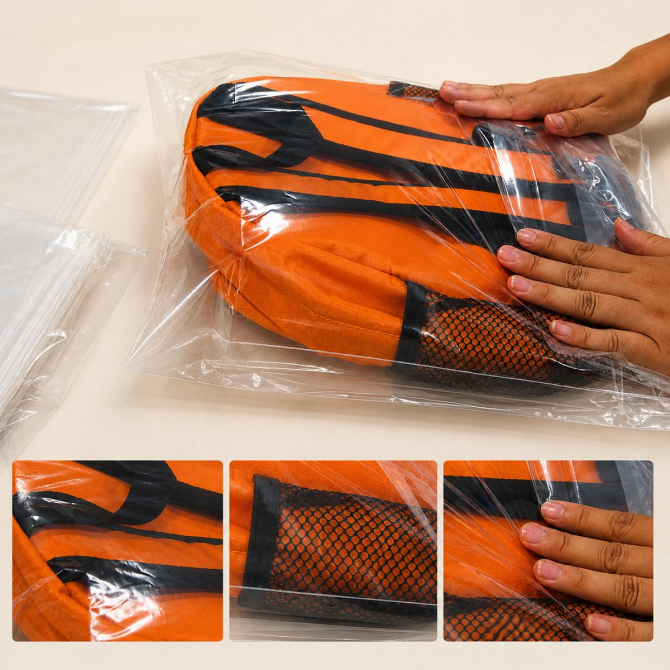
Late changes can create avoidable work on finished goods. New barcode data may require relabeling. A different case pack may require the team to open cartons, recount the backpacks and pack them again. Packing decisions should therefore be reviewed while the product sample is still open for approval.
Use the sample as the approval reference
The sample should show what the stores are expected to receive. The buyer should open the compartments, adjust the straps and check the dimensions, closure and carrying feel. The logo needs to sit in the approved position, and the color should be compared with the agreed reference.
Packing belongs in the sample review. Check the hangtag, label and barcode position. Review the individual packing and the way the backpack will be presented. If the final retail data is not ready, a controlled placeholder may be used on the sample, but it must not pass into production.
Write down every correction. A message that only says “sample approved” can cause confusion when size, artwork and packing changes were discussed in different emails. Keep the approved specification, artwork, color reference and packing record together.
Annabelle Bag has a free sampling policy for verified customers. Eligible buyers pay the international courier cost, while the sample charge is waived. A standard sample is generally completed within seven working days after the requirements have been confirmed. More complex development may need a different schedule, which is confirmed for the project.
Confirm production, inspection and reorder requirements
Bulk production usually takes about four to five weeks after the relevant project details have been confirmed. This estimate only covers the production stage. International shipping and destination handling are calculated separately and should be included in the buyer’s overall timeline.
Before bulk production starts, we normally confirm the details that may affect the schedule, such as fabric availability, custom components, logo production, quantity breakdown by color and packing requirements.
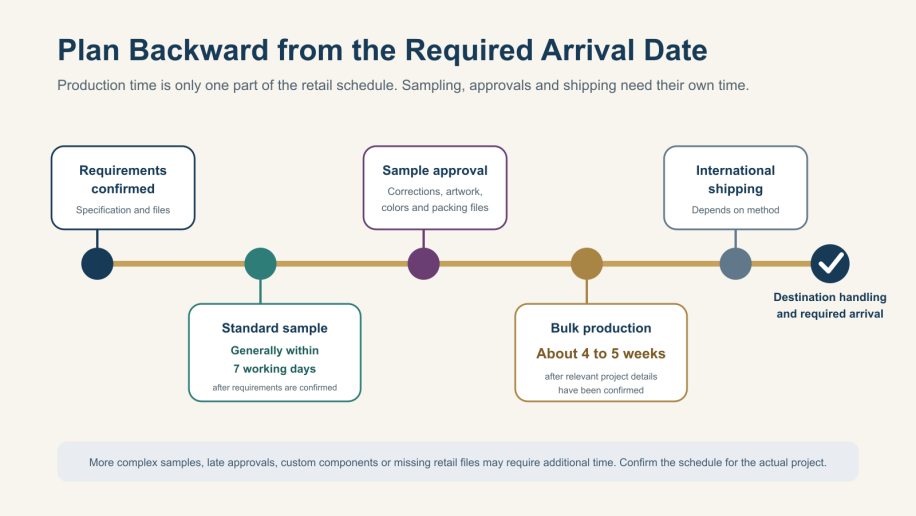
For example, a missing barcode file may not affect the sewing process, but it can delay the final packing stage.
Inspection requirements should be discussed before production is completed. If the buyer requests AQL 2.5, the inspection plan should also clarify the sampling standard, inspection level, defect categories and acceptance rules. AQL 2.5 by itself does not explain which measurements, functions or packing details will be checked.
For example, one Annabelle Bag project included 15,300 backpacks across three styles. The finished goods inspection covered workmanship, functions, measurements, barcodes and export packing based on a sample of 315 units. This example shows one inspection arrangement for a specific project. It does not represent a fixed inspection formula for every order.
Repeat orders still require a new confirmation before production starts. The previous order can be used as a reference, but it does not replace approval for the new production run. Confirm the new quantities and check whether the fabric or any component has changed.
Send enough information for a useful quote
A quotation discussion can start with a product photo, link, physical sample or written description. The reference usually cannot show several important details, including the target market, store format, selling period and expected quantity. Include the expected total quantity and the quantities by color or SKU where they are already known.
It is also helpful to explain which parts of the reference design must remain unchanged. Share the expected dimensions, material direction and logo requirements, together with any packing details such as hangtags, barcodes, carton quantities and carton marks.
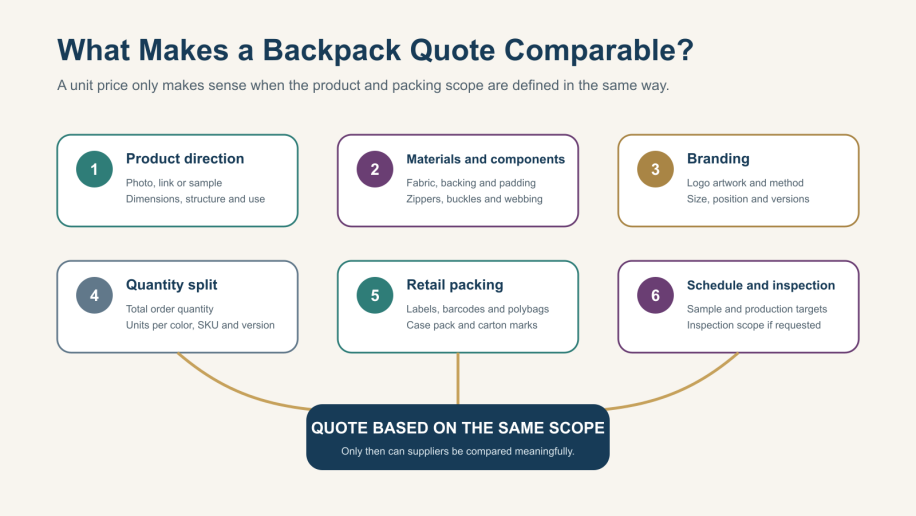
A target unit price or workable buying range is also valuable information. It helps the supplier evaluate whether the requested appearance, construction and packing requirements match the expected cost level. The requested sample date and bulk production schedule can also be included as targets for review.
Some details may still be undecided. If some details are not confirmed yet, it is better to leave them open rather than make assumptions. The sales team can then explain which decisions affect cost or production and discuss practical options based on the project requirements.
When is the backpack program ready to quote?
A quotation becomes more accurate once the supplier understands the retail purpose, product direction, budget expectation and quantity breakdown for each version. The main logo and packing requirements should also be confirmed, although some smaller details may remain open.
The sample comes next. The sample confirms the appearance, construction and packing details that will be used as the production reference.
If you are preparing a backpack project, share the available product reference together with the target market, quantity, budget, logo requirements, colors and retail packing information.
The team can review the customization route first, then prepare the quotation and sample plan based on the actual requirements.
Frequently Asked Questions
How is the MOQ for a custom backpack order determined?
MOQ is not based on the total number of backpacks alone. We also look at the quantity required for each material, color, logo version and packing version. For example, one large order divided among many colors and store labels may create several much smaller production quantities. Send us the expected total and the planned quantity for each version. An estimate is enough if the final split has not been decided.
Why can the final unit price differ from a website price or an early estimate?
A website price or early estimate is usually based on an assumed quantity and specification. The final quotation is calculated after the fabric, construction, zipper, logo process, color split, labels, barcodes and packing have been reviewed. The price may also change if the design is revised or new requirements are added. When comparing quotations, check that each supplier is pricing the same product and packing requirements.
Can the cost be reduced without changing the main appearance of the backpack?
In many cases, yes. The outside shape may remain the same while the material, lining, internal compartments, padding, components or packing are reviewed. Increasing the quantity behind each version may also help. Before simplifying the bag, identify the functions or selling points that must remain. If two workable specifications are available, they can be quoted separately for comparison.
Why is a custom sample priced differently from the bulk unit price?
A custom sample is developed as an individual piece rather than taken from a bulk production run. It may require pattern adjustments, material and component sourcing, logo setup, sewing and corrections. These costs cannot be divided across the full order quantity. Annabelle Bag has a free sampling policy for verified customers who qualify. The sample charge is waived, while the customer pays the international courier cost.
When is another sample needed after changes are requested?
Another sample is normally needed when a change affects the size, structure, pocket layout, shoulder straps, material, logo effect or function of the backpack. A major design change should not move directly into bulk production based only on written comments. For smaller corrections, our team first checks whether an updated specification and approval record are sufficient or whether a revised sample is still needed.
What should I provide if the backpacks are needed for a fixed promotion date?
Provide the required arrival date, destination, expected quantity and planned selling period as early as possible. Include any deadlines for sample approval, barcode files, retail labels and packing instructions. Bulk production usually takes about four to five weeks after the relevant project details have been confirmed. Sampling, international shipping and destination handling require additional time, so they need to be included in the overall schedule.