
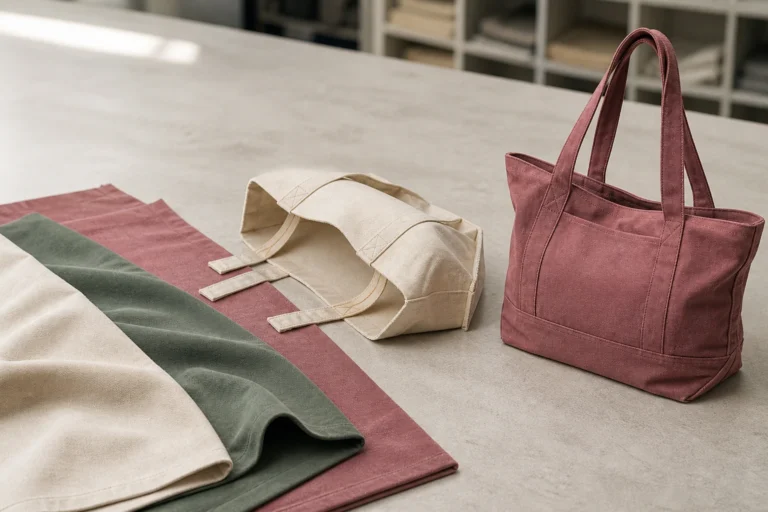
Two canvas totes can look almost identical in a product photo and behave very differently once they are used. For buyers developing a custom tote, that makes fabric approval harder: weight, structure, printing, lining, and even the finished size can change the result. This guide shows what to check, what actually matters, and how to narrow down the right canvas before production.
Start With How the Tote Will Be Used
For a lightweight promotional tote, you may want the bag to fold easily and stay relatively soft. In that case, using a very heavy canvas may only add cost and make the bag feel bulkier than necessary.
A daily-use shopping tote is different. It normally needs a little more body, especially if the bag is larger or expected to carry heavier items.
Then there are totes designed for work, travel, or retail brands that want a more substantial product. These bags may need a firmer canvas, but the fabric alone does not create that result. The size of the bag, the bottom construction, lining, handles, seams, and internal structure all affect how the finished tote behaves.
Quick Reference: Match the Canvas Direction to the Tote Use
| Tote use | Canvas direction | What to check |
| Promotional / event | Lighter and softer | Easy folding; avoid unnecessary bulk |
| Shopping / grocery | More body as size or load increases | Bottom, gusset, handles, and shape when loaded |
| Work / retail | Firmer or more structured | Laptop load, shape, printing, and lining |
Choose the Canvas Weight for the Bag You Want
Canvas weight gives you a useful starting point, but it should not be the final decision.
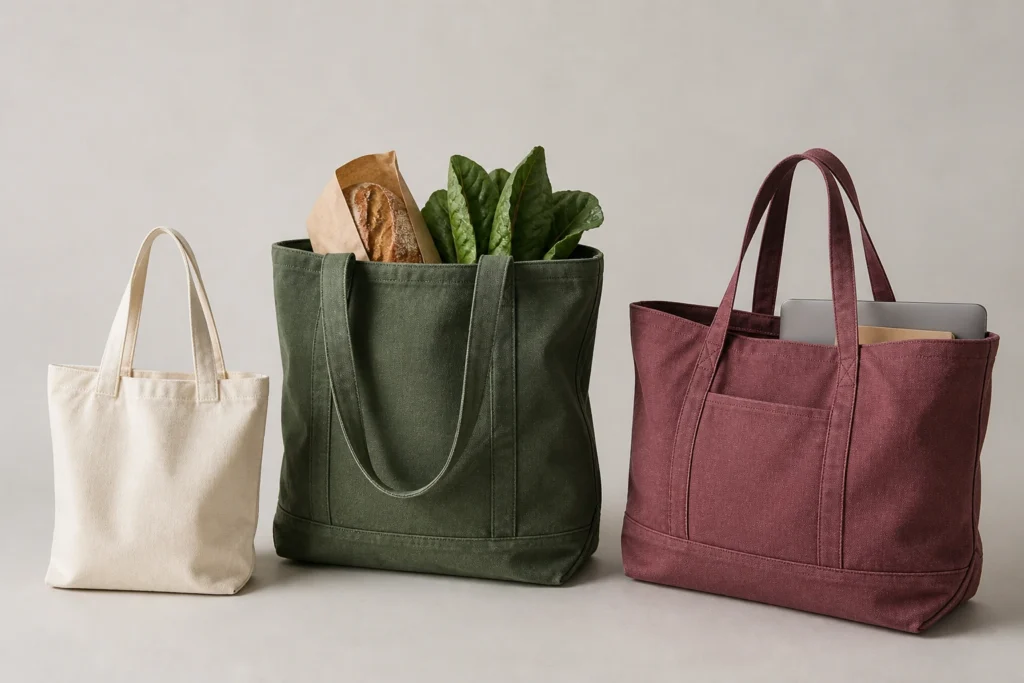
For a simple promotional tote, a lighter canvas can be perfectly suitable. The bag stays easy to fold and does not feel unnecessarily heavy. Move to a larger shopping tote or a bag that needs more body, and a heavier option may start to make sense.
There is still quite a bit of difference between fabrics with similar weight numbers. Put two samples on the table and one may feel soft while the other almost holds its shape by itself.
If both are within the right weight range, we recommend comparing the actual fabrics rather than choosing one just because the number is higher.
Bag Size Changes the Result
A piece of canvas does not behave exactly the same way on every tote.
Imagine using the same soft canvas for a small event bag and then for a wide grocery tote with a deep gusset. The first bag may look fine. On the larger one, there is simply more fabric around the body, so the sides and bottom can behave very differently once something is put inside.
This is why the material should also be checked on the actual bag design. A swatch tells you what the fabric feels like. It does not show you the whole bag.
Printing Can Change the Material Choice
Canvas texture becomes much easier to notice when there is artwork on top of it.
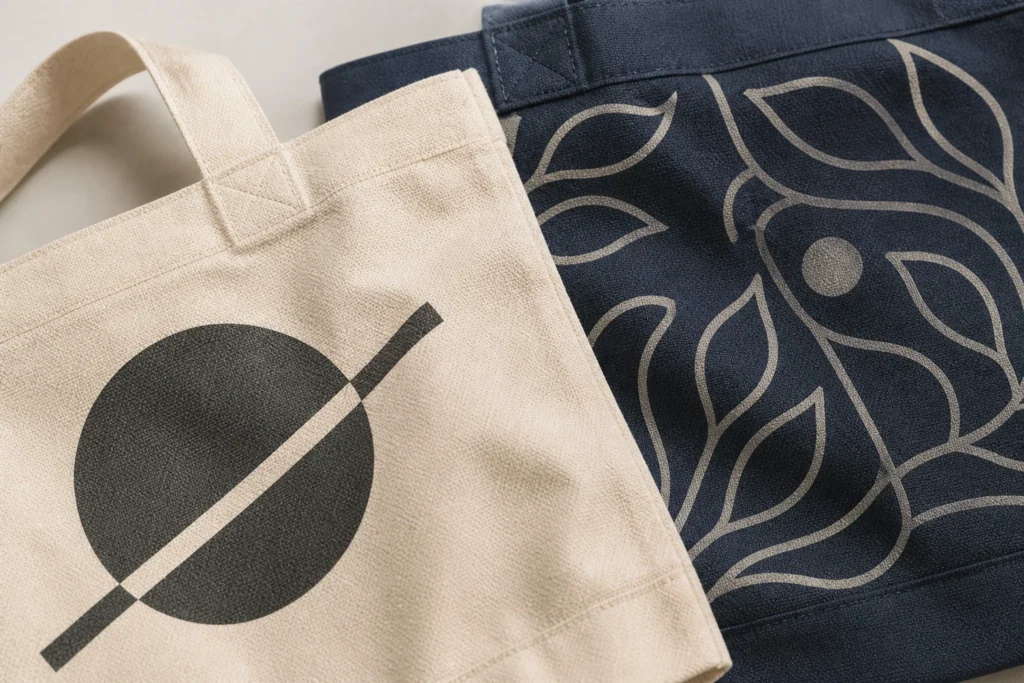
A simple dark logo on natural canvas usually leaves plenty of room for the texture to show. Small lettering or more detailed artwork is less forgiving. On a coarse surface, some of those details may not look as clean as expected.
Color matters here as well. The same artwork that is easy to read on natural canvas can look quite different when the background changes to black, navy, or another dark color.
For an important logo or graphic, seeing the print on the chosen canvas is more useful than judging the artwork only from a digital file.
Use the Finished Tote to Check the Canvas
A piece of canvas can feel right in your hand and still behave differently once it has been made into a bag.
Put the things the tote is meant to carry inside the sample. For a work tote, that could be a laptop, charger and notebook. For a shopping tote, use a few everyday items. You do not need to overload the bag. Just use it the way the customer probably will.
Now look at the shape. The bottom may sag more than you expected, or the sides may become too soft once there is some weight inside. A canvas that seemed quite firm as a swatch can also feel different on a larger bag.
Printing is easier to judge on the finished tote too. Look at the logo from a normal distance rather than only checking it close up.
This is usually where small material problems become obvious. If the tote feels too soft, too stiff, or simply different from what you had in mind, the sample gives you a chance to change it.
Do You Want the Tote to Fold or Hold Its Shape?
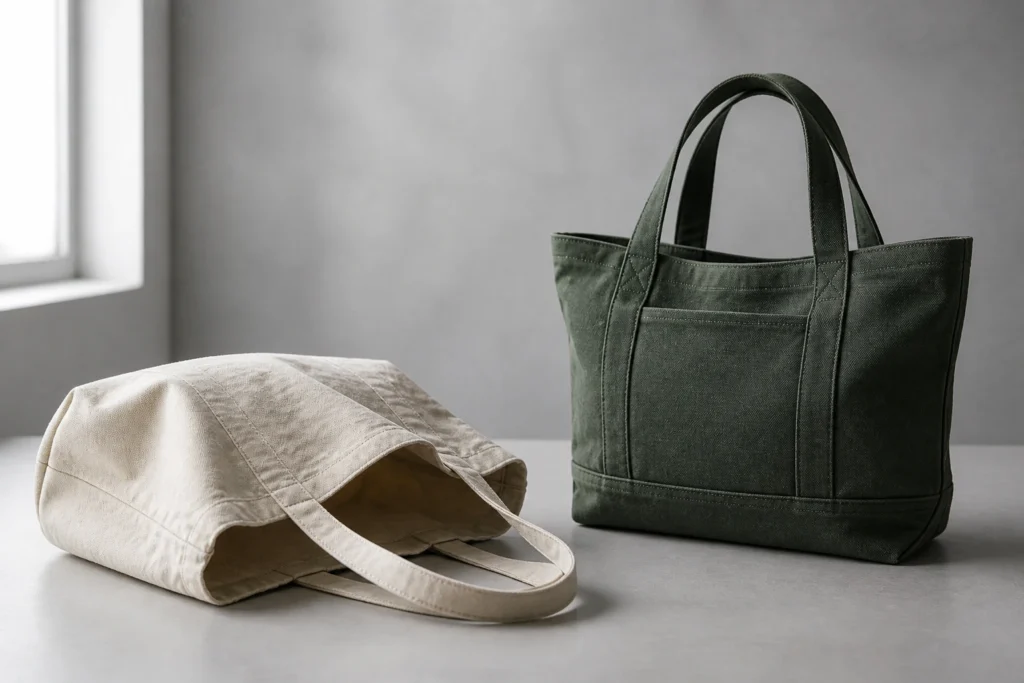
Some bags are supposed to collapse when they are put down. That is not a problem. For an event tote, shopping bag, or simple giveaway bag, being soft and easy to fold may actually suit the product.
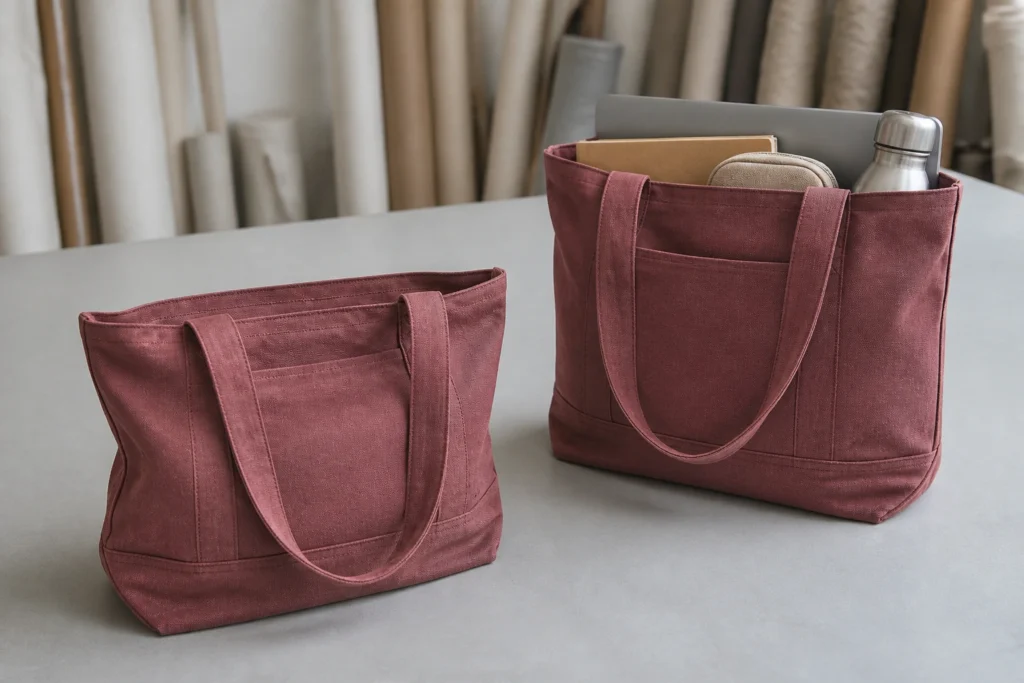
A work tote is another story. Put a laptop, charger, notebook, and a few other items inside and the shape of the bag becomes much more noticeable.
A firmer canvas can help here, although the bottom and gusset matter too. There is no need to make every tote stiff simply because a heavier canvas is available.
Before choosing between two fabrics, picture the bag sitting on a table. Should it fall naturally, or would you rather see it keep some shape?
Natural Canvas or Colored Canvas?
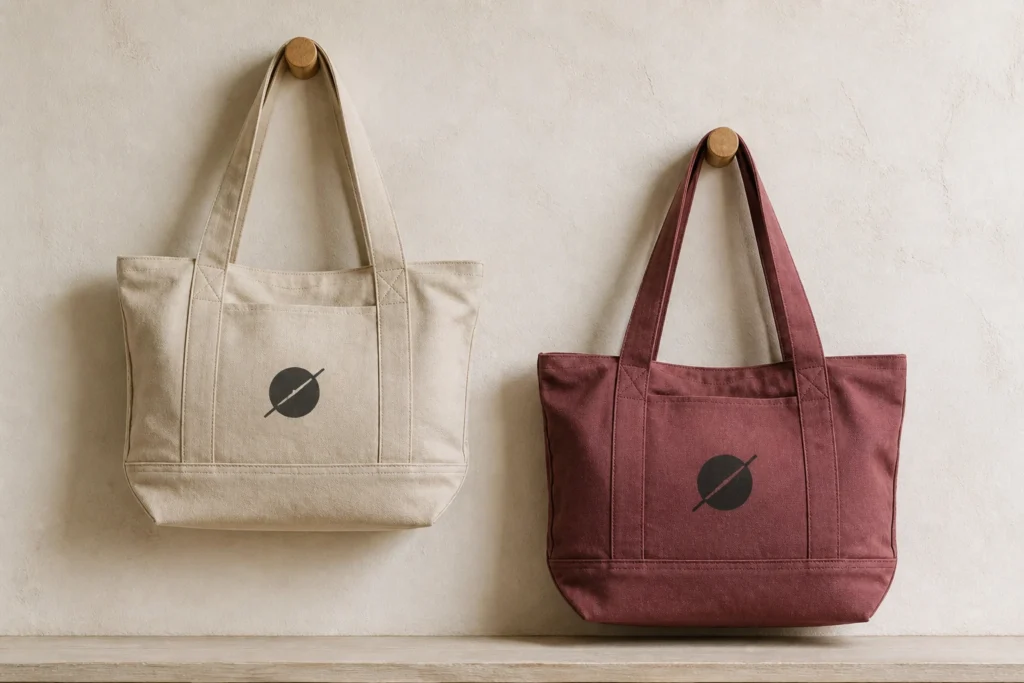
Natural canvas leaves the fabric itself visible as part of the design. It is often paired with fairly simple artwork, and darker printing is easy to see against the light background.
With colored canvas, the fabric color becomes part of the product. Navy, black, green, red, or a custom shade can completely change the way the same tote design looks.
That also changes the background behind the logo. Artwork that looked right on natural canvas should not automatically be assumed to look the same on a darker fabric.
Does a Canvas Tote Need a Lining?
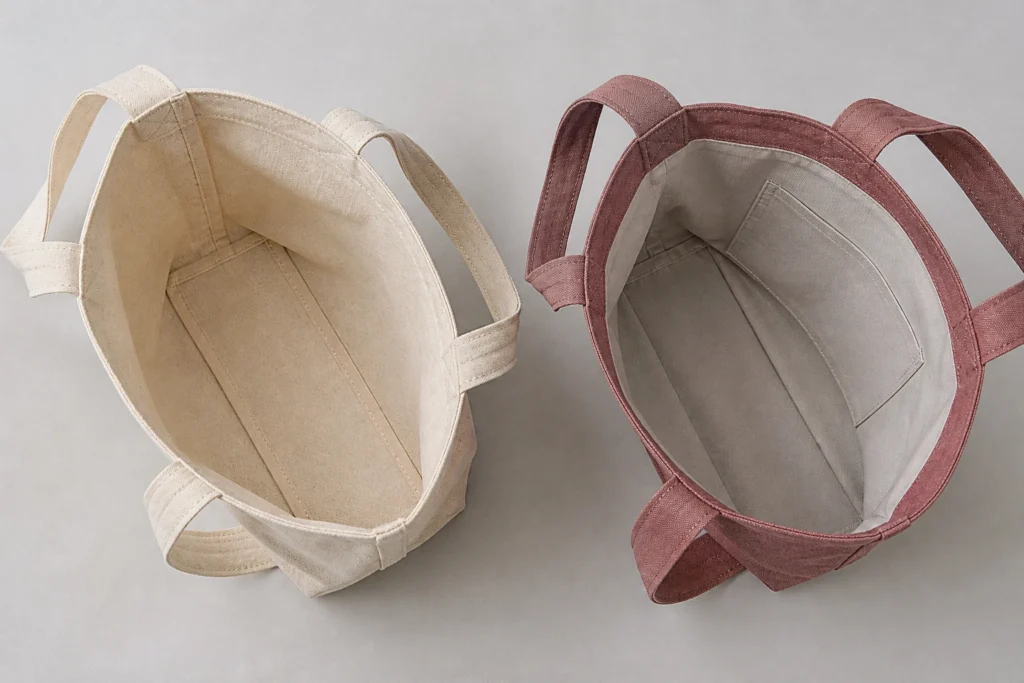
Many simple canvas totes are made without a lining. For a shopping bag, promotional tote, or other basic design, the inside of the canvas can be left visible and the bag can still work perfectly well.
A lining starts to make more sense when there is more happening inside the bag. A work tote may have several pockets. A retail bag may need a cleaner-looking interior. Some designs also use a lining because the inside color or finish is part of the overall look.
It can affect the feel of the bag too. Once another layer of fabric is added, the finished tote may feel less soft than the same canvas used on its own. This is worth remembering if the original idea was a light bag that folds easily.
There is no need to add a lining simply because the canvas is not very heavy. First decide what the inside of the tote needs to do. If an unlined construction already gives the result you want, it may be the better choice.
Water Resistance Is a Separate Requirement
A beach tote and a promotional canvas bag may be similar in size, but they are not used in the same way. Beach bags may be placed on wet ground or carry damp towels and swimwear. Outdoor totes can face the same problem.
For these bags, water resistance needs to be discussed as its own requirement. The canvas weight does not tell you how the bag will deal with water, and choosing a thicker fabric is not a substitute for deciding what protection is actually needed.
This is less important for many ordinary shopping or event totes. Adding a special finish or treatment to a bag that rarely gets wet may simply add something the product does not need.
The useful question is where the tote will be used. If regular contact with water is part of that use, it should be included when the material is chosen.
Final Canvas Selection Check
| Factor | What it changes | What to confirm |
| Canvas weight | Starting point for softness and body | Compare actual fabrics, not the number alone |
| Bag size | How the same canvas hangs and carries load | Check the finished size and depth |
| Bottom / gusset | Shape and support | Look at the bag empty and loaded |
| Printing / color | How artwork reads on the surface | Check the print on the selected canvas |
| Lining | Interior finish and overall feel | Use it only when the inside needs it |
| Water requirement | Whether an extra finish may be needed | Treat it as a separate use requirement |
| Finished sample | Shows the combined result | Use the bag as the customer probably will |
Frequently Asked Questions About Canvas for Tote Bags
What Is Canvas Material for Bags?
Canvas is a woven fabric used for many types of bags, especially totes, shopping bags, and other styles that need some body without using a very rigid material.
The name “canvas” does not describe one exact fabric. Canvas can come in different weights, colors, surface textures, and levels of firmness. That is why two fabrics both sold as canvas may feel quite different when you put them side by side.
Is Canvas a Good Material for Bags?
For many tote bags, yes. Canvas works well when you want a fabric bag with a visible woven texture and enough body to hold a simple shape.
It is not the right choice just because the bag is called a tote, though. A lightweight event bag and a work tote carrying a laptop have very different jobs. The canvas still has to match the bag you are making.
Are Canvas Tote Bags Durable Enough for Groceries?
They can be, but the word “canvas” alone does not tell you how much a grocery tote can carry.
Look at the fabric together with the bag size, bottom, handles, and seams. A grocery tote that regularly carries bottles, cans, or other heavy items needs more attention in these areas than a bag used for clothes or a few light purchases.
This is also a good reason to put real items in the sample before approving it.
How Do I Compare Two Canvas Fabrics at a Similar Weight?
Put the weight number aside for a moment and handle both fabrics.
One may bend easily while the other feels much firmer. Look at the surface as well, especially if a logo will be printed on the bag. If both still seem suitable, making a sample is more useful than trying to choose between them from the specification alone.
What Should I Send a Manufacturer When Asking for a Canvas Recommendation?
You do not need to know the exact canvas weight before asking.
Send the tote size or a reference bag, explain what it will be used for, and mention what people are likely to carry inside. It also helps to show the logo or artwork and say whether you want the finished tote to feel soft or more structured.
If you already know that the bag needs a lining or will regularly be used around water, include that too. This gives the manufacturer much more to work with than simply asking for “heavy canvas.”
Still Not Sure Which Canvas to Use?
There is no single canvas weight that works for every tote bag. Start with what the bag needs to carry, how you want it to feel, and what the finished product should look like. From there, it becomes much easier to narrow down the fabric.
If you already have a tote design, product photo, reference bag, or even an online link, you can send it to us. You do not need to know the exact canvas weight before starting.
At Annabelle Bag, we work on custom tote bag projects for OEM and private label orders. Tell us the size, intended use, logo, and any details you want to keep or change. We can compare suitable canvas options with you and use the sample to check how the material works on the actual bag.
Sometimes the right answer is a heavier canvas. Sometimes it is not. The goal is simply to choose a material that makes sense for the tote you are actually producing.