
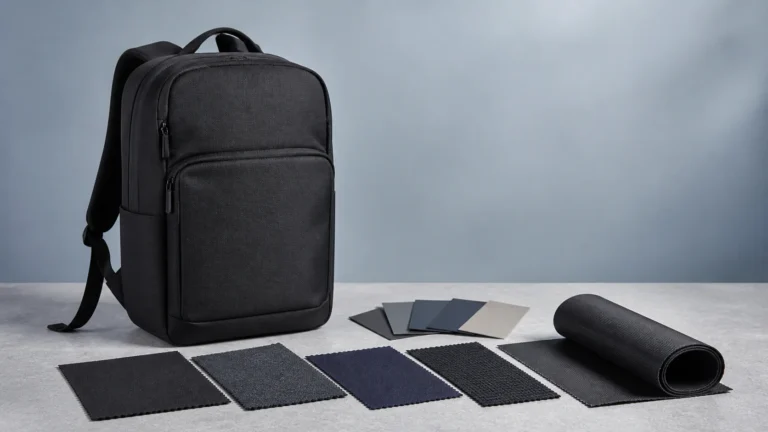
A custom backpack material inquiry may include a clear reference photo and still be too early for a useful recommendation. The same bag may be intended for a short supermarket promotion, a regular retail range or outdoor use, and those programs do not need the same material. The target price tells us how closely the reference can be followed. The intended use tells us what the fabric has to do. The expected quantity tells us whether the preferred color, coating or special fabric can actually be sourced.
The material choice starts with the job of the backpack
A backpack for a short supermarket promotion may look almost the same as one sold in a regular accessories range. Once the buyer explains how the bag will be used, the difference is easier to see.
For a promotion, the buying price and shelf appearance usually come first. Standard 600D polyester with an available PVC backing is often a practical place to start for a simple backpack. It gives the bag enough body for display without adding performance that the program may not need.
One part should not be reduced simply to reach a lower price. The shoulder straps still need suitable stitching and bartack reinforcement for the agreed load. A basic backpack can have fewer internal pockets and lighter padding, but a failed shoulder strap creates a different kind of problem.
A backpack intended for daily retail use will be handled and carried more often. The buyer may want a cleaner matte surface, a better hand feel and some protection from light rain. Depending on the reference and price, we may compare different polyester constructions with 420D nylon and a suitable PU or TPU coating. The material name alone does not settle the choice. The backing, coating and finished structure still need to be checked.
An outdoor brief is less forgiving. “Water-resistant” is too general if the buyer expects a measured result. A requirement such as a PU coating rated at 2,000 mm or above needs to be stated before the material is selected. The same applies to high tear resistance, a C0 DWR finish or a particular Cordura construction. These requirements change the available material source as well as the price.
The buyer does not need to name the fabric at this point. The intended use gives us the first direction. The reference photo and target price then tell us which options are realistic enough to compare.
The reference and the target price have to meet
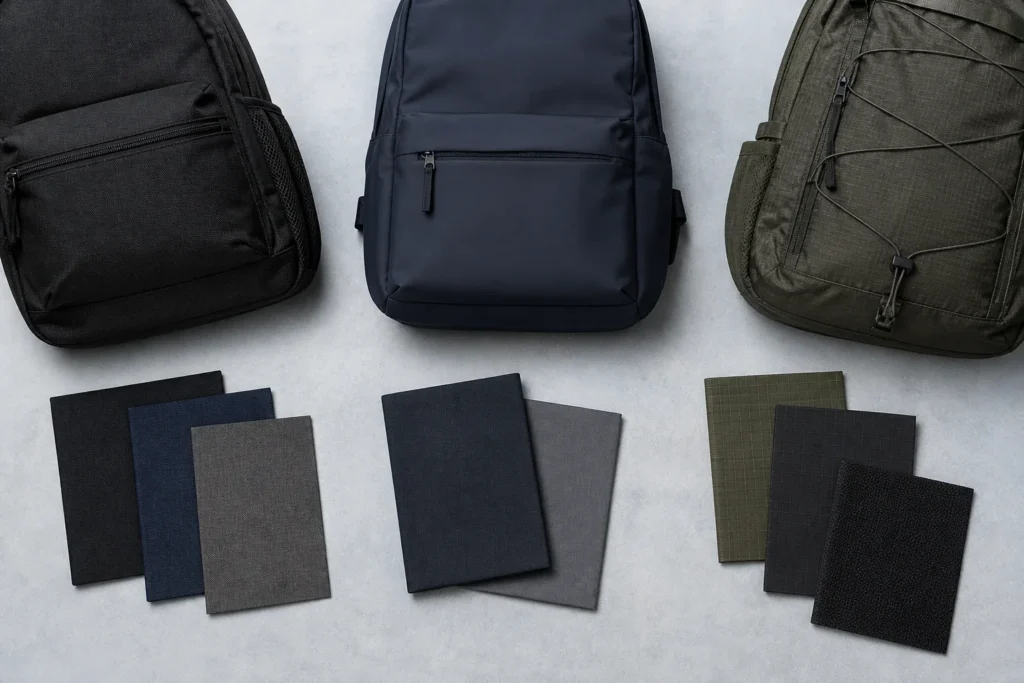
The most common material problem is a gap between the reference and the budget. The backpack may be possible to manufacture, but not with every visible and hidden detail kept at the requested price.
Suppose the reference uses a high-density matte outer fabric, taped water-resistant zippers, a shaped EVA back panel, metal hardware and a complete internal organizer. Replacing the outer fabric with a cheaper polyester will reduce part of the cost. It may not close the whole gap. Foam, air mesh, small internal panels, binding, zipper construction and sewing time are contributing too.
We prefer to make that gap clear before sampling. The buyer can then decide which result matters most.
One option may stay close to the original. It could keep a matte 900D polyester with a PU coating, thicker EVA in the back and shoulder straps, air mesh, a padded laptop compartment and the full organizer. The zipper and puller would also be selected to support the same appearance.
A cost-adjusted option may use a standard 600D polyester with an available backing. The organizer can become one open pocket. Thinner EPE can replace the heavier EVA in areas where the agreed function allows it. A regular number 5 nylon zipper and standard POM components can replace more specialized parts.
The final specification often sits between these two. A retailer may keep the matte 900D outer because it carries the look of the product, then simplify the back panel and remove the small internal pockets. Another buyer may keep the functions and accept a more regular outer fabric. The useful comparison is not simply 900D versus 600D. It is what each complete specification gives the buyer at its quoted price.
Protect the results a low-price backpack still needs
A simple supermarket backpack can be price sensitive without looking unfinished. Two results normally deserve protection when the specification is reduced.
The first is the shape on the shelf. These backpacks may be hung, stacked or placed in a promotional display. If the outer fabric is soft and the backing is too light, the body can collapse. The dimensions may be correct, but the product no longer presents well.
The fabric name cannot solve this by itself. A firmly backed 600D polyester may hold its shape better than a softer 900D option. The lining, binding and internal support also influence the finished body. The buyer should judge the swatch and the backpack sample, not approve the result from the denier alone.
The second result is the basic strength of the shoulder straps. Padding thickness can be reviewed, but the strap material, attachment points and bartack reinforcement still have to suit the expected load. If the retailer expects the bag to carry 8 to 10 kg, that should be written into the project requirement together with the agreed test method. A lower price is not a reason to leave the load undefined.
For many basic retail bags, the safer savings are hidden inside the product. A multi-pocket organizer can become one simple sleeve. An 8 mm or 10 mm EVA back pad can be reviewed against a thinner EPE construction. Shaping seams and large areas of air mesh may also be simplified when they are not part of the selling point. These changes reduce material and sewing work while allowing the visible front of the backpack to remain close to the reference.
Quantity can limit the material before the design does
The backpack quantity and the fabric mill minimum are separate numbers. A special embossing, custom Pantone dye, TPU lamination or unusual coating may require more fabric than the backpack order will consume. Depending on the material and mill, a custom run may begin around 1,000 to 3,000 yards. The exact minimum has to be confirmed for the requested fabric rather than assumed from a general range.
The color split changes the calculation. An order for 2,000 backpacks may sound large enough until it is divided into four custom colors. The mill then sees four smaller fabric requirements, not one large order. Different logo versions or packing programs can divide the production further even when they do not change the fabric itself.
When the quantity does not support a custom material, we normally begin with what can actually be sourced. The buyer may select from available stock colors, use a regular 600D or 900D fabric with a similar appearance, or keep the face of the material while changing to an available backing. Reducing the number of colors can also put more volume behind the version that matters most.
The substitution should appear in the quotation. “Similar material” is not a complete description, especially when the reference has a special surface or coating. The buyer needs to know what is being priced before deciding what to sample.
“600D polyester” still needs four answers
Many inquiries arrive with 600D polyester already written into the request. That gives us a starting point, but it does not define the finished fabric.
The first question is what sits behind the face fabric. PVC, PU, TPE and TPU backings do not give the same weight, flexibility, hand feel or cost. The thickness and application of the backing can also change how firmly the backpack holds its shape. Two suppliers can therefore quote 600D polyester and still be pricing noticeably different materials.
The second question concerns water. Does the buyer need a surface water-repellent finish for occasional light rain, or is there a measured water-pressure requirement? A DWR finish, a coated fabric and a waterproof backpack are not the same claim. Seams and zipper openings remain possible entry points even when the outer fabric resists water.
The third question is whether the polyester must contain recycled material. Virgin polyester and RPET may look similar, but a retailer asking for GRS-supported recycled content also needs an appropriate supply route and supporting documents. That requirement affects sourcing and cannot be added as a label after an ordinary fabric has been booked.
The fourth question is color. A common stock black or navy may be available for a smaller program. A custom color requires an agreed Pantone reference or a physical swatch, followed by dyeing and color approval. The quantity and schedule may change with it.
Without these four answers, the material line is still open. Backing, water requirement, recycled content and color belong beside the denier in any serious quotation comparison.
Logo artwork can change an otherwise suitable material
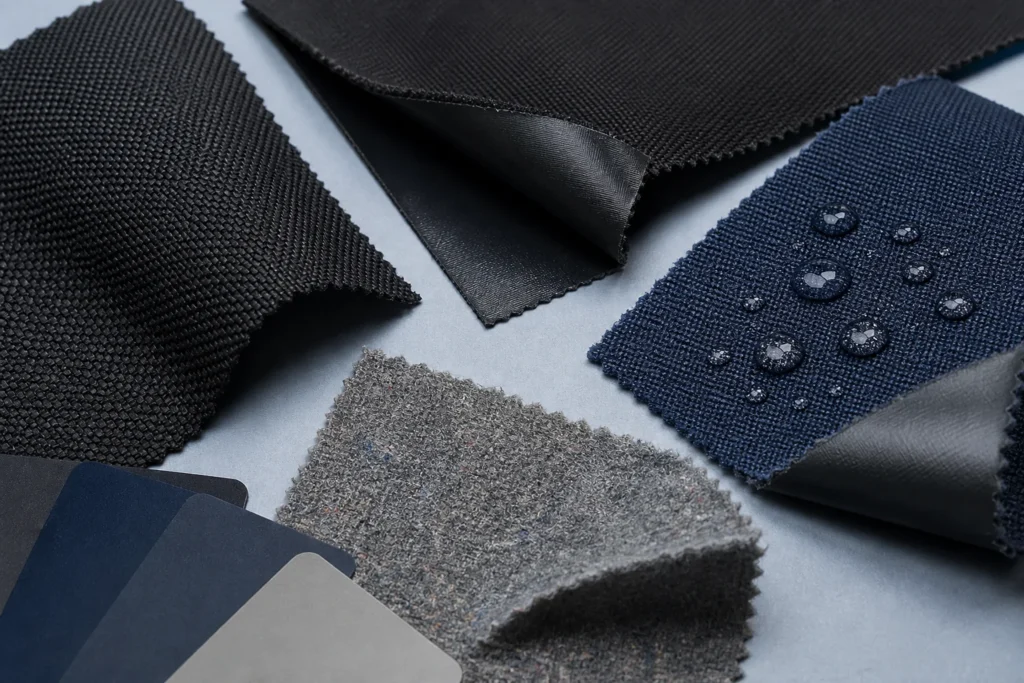
A fabric can meet the price and performance requirements but give the wrong logo result. Fine screen-printed lines or small heat-transfer text need a reasonably smooth surface. On coarse 1680D Oxford or open mesh, the artwork may lose definition, break at the edges or fail to bond evenly. That does not always mean the buyer has to abandon the fabric.
The decoration can change instead. A woven label, rubber or silicone patch, or a separate smooth panel can give detailed artwork a cleaner base. In other cases, the logo can be simplified or enlarged. The correct method depends on the artwork and the actual fabric, so the decoration test should use the material intended for production.
Color approval needs the same discipline. A photograph on a screen is useful for direction but unreliable as the only matching standard. A Pantone TCX or TPX reference, a Pantone C reference where appropriate, or a physical fabric swatch gives the supplier a clearer target. A lab dip can then be reviewed against that agreed reference.
Market requirements belong in the quotation discussion
Compliance and recycled-content requirements can remove materials from the shortlist. They also affect cost and lead time, so they should be raised before the quotation is finalized.
European customers may require REACH-related chemical testing or supplier evidence for substances such as restricted phthalates and azo dyes. Buyers selling into California may request a Proposition 65 review, particularly for coatings, plastic components and other materials that could contain listed substances. A retailer requiring GRS material may also expect chain-of-custody and transaction evidence for the recycled supply chain.
These requests need to be stated accurately. GRS concerns recycled content and chain of custody. Proposition 65 is a California warning law, not a universal backpack certificate. OEKO-TEX Standard 100 may be requested for the fabric in some projects, although ordinary backpack programs do not always require certification of the complete bag. PFC-free or C0 DWR is more likely to appear in outdoor or environmentally focused programs.
RoHS is normally relevant when the backpack includes an electrical or electronic part, such as a USB module, solar panel or LED system. A standard textile backpack should not be given an RoHS requirement simply because it is sold in Europe.
The buyer should tell the supplier which document, test or material status the retailer expects. A list of acronyms without a defined requirement can lead to the wrong source being quoted.
Use the swatch and the sample for different decisions
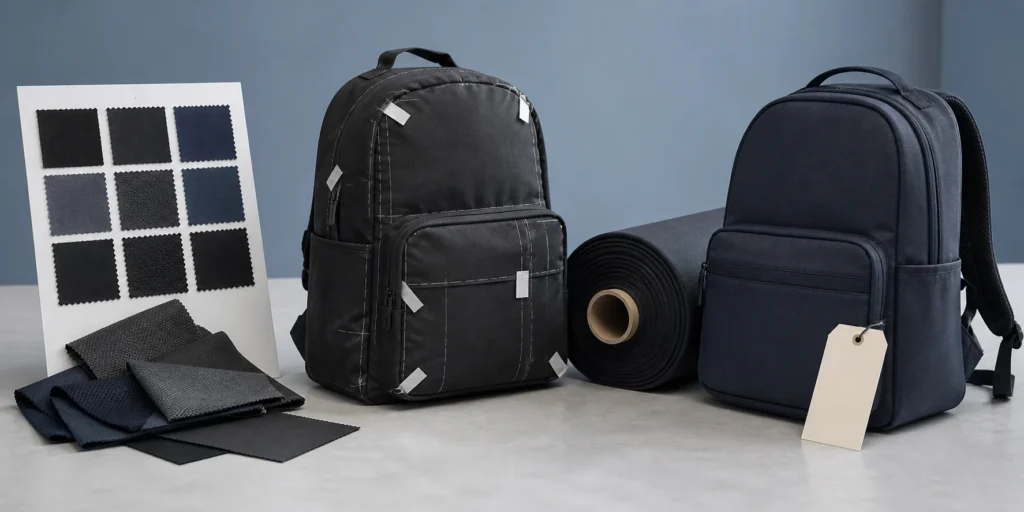
One sample does not have to approve everything at once. The material swatch is used to review the color, texture, gloss, visible backing and general hand feel. It helps the buyer compare two directions before a complete backpack is made.
The development sample checks the dimensions, shape, pocket layout, padding and sewing. If the production fabric is not available because of the mill minimum or lead time, a similar stock fabric may be used for this first sample. That substitution must be identified before the sample is sent.
A clear note can read: “This sample is for construction, shape, and pocket layout reference only. Fabric color/backing is made with similar stock material. Actual bulk fabric will follow the approved swatch.”
After the production material has been made or allocated, the buyer should review the bulk swatch. The required physical and chemical tests can then be completed on the appropriate material. The final approved material and backpack sample should be kept with the specification and approval record used for production.
Separating these decisions prevents a common misunderstanding. Approval of a temporary sample does not automatically approve a bulk color, coating or recycled-content claim that was not present on that sample.
What buyers should define before asking for a material recommendation
Begin with the target buying price and the intended use. Together, they show whether the project should be reviewed as a basic promotional program, a regular retail backpack or a higher-performance product.
Then explain what matters in the reference. The buyer may want to keep the matte surface, the structured front pocket or the logo area. The lining, small internal pockets or back padding may be open to change. Stating that difference gives the supplier room to reduce cost without altering the wrong part of the product.
Add the estimated order quantity and the expected number of colors. If the final split is not ready, an estimate is enough for the first review. The supplier can identify which directions use stock material and which depend on a custom fabric run.
Logo artwork, color references and market documents should be included when they are already known. These points may change the material or sourcing route, and they are easier to manage before sampling than after the fabric has been ordered.
The first inquiry can still be simple. Send a photo, link, sketch or physical sample with the target price, use, quantity and the details that must remain. The material recommendation can then be built around the actual backpack program rather than around a familiar fabric name.
What buyers should define before a material recommendation
| Factor | What the buyer should provide | How it changes the material decision |
| Intended use | Promotion, regular retail, daily commute or outdoor use | Sets the expected appearance, hand feel, durability and water requirement |
| Target buying price | A unit-price target or a workable price range | Shows whether to protect the outer appearance, internal functions or both |
| Order quantity and color split | Total units plus the expected quantity for each color | Determines whether stock material, stock colors or a custom fabric run is realistic |
| Reference priorities | Visible details that must stay and hidden details that may change | Prevents cost reduction from altering the wrong part of the backpack |
| Performance requirement | Light-rain protection or a measured standard; expected load when relevant | Defines the coating, finish, reinforcement and testing scope |
| Recycled and market requirements | GRS, REACH, Proposition 65 or other retailer-specific evidence | Restricts the sourcing route and affects cost, minimums and lead time |
| Logo and color reference | Artwork, decoration method, Pantone reference or physical swatch | Confirms surface compatibility and whether custom dyeing is required |
A few questions about custom backpack material selection
Can the exact backpack material be identified from a photo?
Usually not. A photograph may show the visible texture and overall appearance, but it cannot confirm the yarn, backing, coating, recycled content or padding behind the fabric. If an exact match matters, provide a physical bag or approve an actual material swatch.
Is a higher denier always better for a backpack?
No. Denier describes yarn size, not the complete performance or structure of the finished fabric. Yarn quality, weave, backing, coating and the construction of the backpack also affect the result. Compare the physical material and the finished sample instead of choosing from the denier alone.
Why can two 600D polyester quotations have different prices?
The two suppliers may be using different backings, coating thicknesses, finishes, colors or recycled content. Their backpack specifications may also differ in lining, padding, zippers and internal construction. Ask for the complete material and product specification before comparing the price.
What happens if the order quantity is too low for a custom fabric?
The project can review stock colors, a regular fabric with a similar surface or an available backing. The buyer may also reduce the number of colors so that more quantity sits behind one version. Any change from the reference should be stated in the quotation and approved before production.
Can stock fabric be used for the development sample?
Yes, when the purpose of that sample is to check the shape, construction and pocket layout. The temporary material must be marked as a substitute. The production color, backing and other material requirements still need their own approval.
When should GRS, REACH or Proposition 65 requirements be raised?
During the quotation stage, or earlier. These requirements can change the material source, minimum quantity, testing cost, documents and schedule. If they are introduced after the material has been ordered, the project may need a new sourcing and approval cycle.
Working on a custom backpack?
If you have a backpack photo, product link, sketch or existing sample, you do not need to choose the exact material before contacting Annabelle Bag.
Send the reference together with the intended use, target price, estimated quantity, color plan and any fixed requirements for the appearance, logo or market documents. We can compare a direction close to the reference with a cost-adjusted option, then confirm the selected material through swatches and sampling before bulk production.