
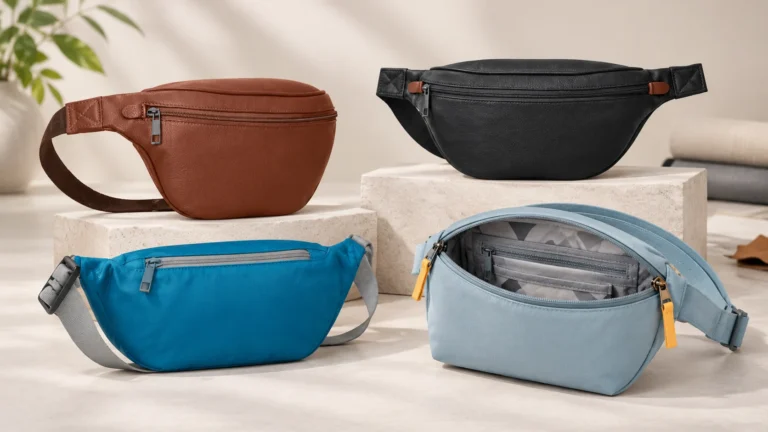
Types of crossbody bags can look similar in a catalog, but they behave very differently once they are worn and loaded. A compact pouch, sling bag and messenger-style crossbody may all use a shoulder strap, yet they solve different carrying problems. For buyers, choosing the wrong starting structure can create issues later with capacity, access, balance or pocket layout.
This guide compares nine common styles, where each one works best, and the practical differences worth checking before you move on to dimensions, materials and sampling.
What Counts as a Crossbody Bag?
A crossbody bag is carried with a strap running diagonally across the body, but that does not mean every crossbody bag follows the same construction. This basic carrying definition is also reflected in the dictionary meaning of “crossbody.” Crossbody definition – Dictionary.com
Some names describe the shape of the bag. A camera bag, for example, is usually identified by its compact, boxy body. Others describe how the bag is normally used. Messenger bags are built around larger daily loads, while travel crossbody bags tend to focus more on access and organization.
Sling bags and waist bags make the boundary even less clear. Both can be worn across the torso, although their body shape and strap position may be very different from a traditional hip-level crossbody. Current retail categories also commonly group sling-style products together with crossbody bags. Crossbody and sling bag examples – REI Co-op
For this reason, it is more useful to compare the bag by shape, carrying position, opening, capacity and intended use rather than relying on the product name alone.
9 Common Types of Crossbody Bags
1. Mini or Compact Crossbody Bag
Mini crossbody bags are built for a small number of essentials: usually a phone, cards, keys, a wallet or similar everyday items.
The body may be flat, slightly gusseted or softly structured. Most designs keep the construction simple, with one main compartment and perhaps one additional pocket.
The challenge with very small bags is usable space. A bag may look large enough from the outside but still feel cramped if the zipper opening is narrow or too many internal features are added.
For simple retail collections, promotional programs and lightweight travel accessories, this is often one of the easier directions to develop without making the product unnecessarily complicated.
If you need to define opening size, strap range and fit in more detail, see our crossbody bag size and strap guide.
2. Camera Crossbody Bag
A camera-style crossbody has a more defined, box-like silhouette. It is generally deeper than a flat pouch and commonly uses a top zipper, which makes the main compartment easy to open.
The name does not always mean that the bag is designed for photographic equipment. In everyday accessories, it is also used to describe the shape itself.
What matters during development is how well that shape holds after sewing.
A soft fabric with little reinforcement can collapse more easily, while foam, interlining, piping or a firmer gusset can give the same basic pattern a much stronger outline. That choice affects not only appearance, but also how bulky the finished bag feels.
3. Flap Crossbody Bag
The front flap is the defining feature here.
It may close with a magnetic snap, buckle or other fastening, and some designs also include a zipper underneath. This gives the designer more control over the front appearance than a simple zip-top pouch.
The flap can also introduce problems if its proportions are not right. If it is too stiff, too short or poorly aligned with the body, the bag can look unbalanced and become awkward to open.
For relatively simple designs, the flap can remain mostly visual. More structured versions may require extra layers, backing material or concealed hardware.
4. Sling Bag
Sling bags usually sit higher on the body than traditional crossbody bags. They are commonly worn across the chest or upper back, with a compact body that follows the torso more closely.
That makes them a practical direction for commuting, walking, travel and everyday carry.
Many sling designs use a curved or tapered shape rather than a standard rectangular body. This is where the strap layout starts to matter.
A bag can look fine on a table but rotate, pull or sit at an uncomfortable angle once it is loaded. The position of the upper and lower strap anchors affects how the body rests against the wearer.
Zipper direction matters as well. If the design is intended to swing from the back to the front for quick access, the opening should still be easy to reach in that position.
These details are worth checking on an actual sample rather than judging the design only from a drawing.
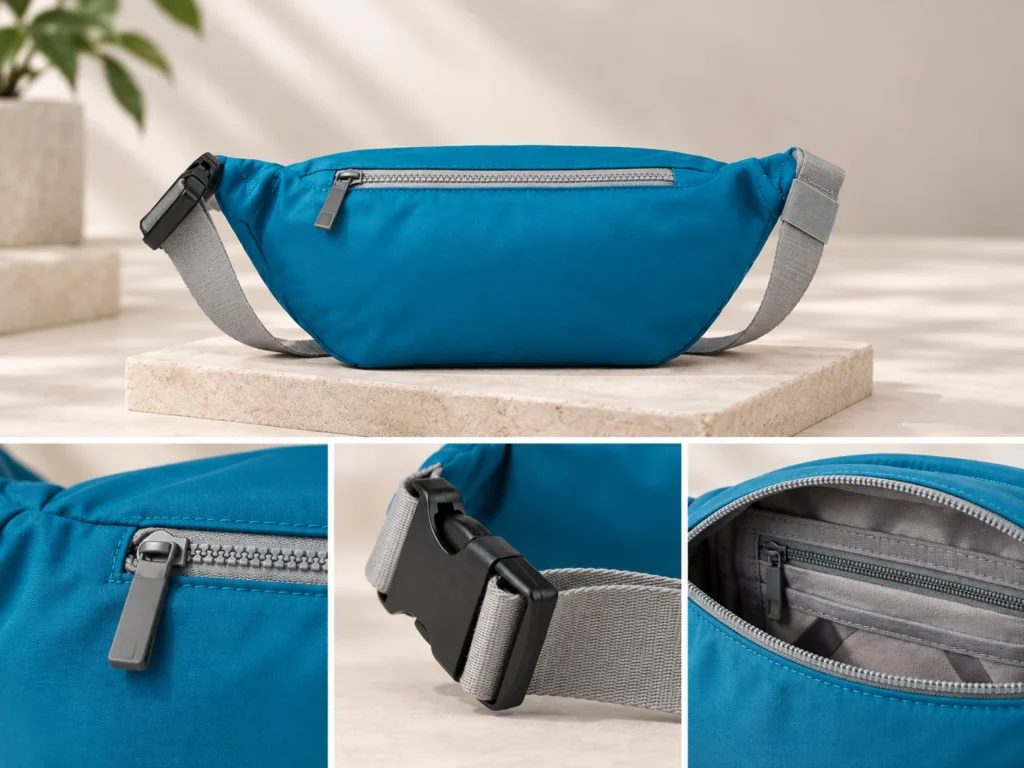
5. Belt or Waist Bag Worn Crossbody
A waist bag can also be worn across the chest when its strap has enough adjustment range, but not every waist-bag pattern works equally well in both positions.
A traditional waist bag is shaped around the waist. Its side wings, buckle position and curvature are usually designed with that carrying position in mind.
Once the bag moves higher onto the torso, those same details behave differently.
This is why simply making the webbing longer does not automatically turn a waist bag into a good crossbody product.
If both wearing positions are important, they should be considered from the beginning of the design rather than added after the pattern has already been finalized.
6. Messenger-Style Crossbody Bag
Messenger bags usually provide more capacity than compact crossbody styles.
The body is often wider and more rectangular, with a long shoulder strap and enough space for documents, daily equipment or electronic devices. Some use a full front flap, while others combine a shorter flap with a zipper opening.
This style fits naturally into commuting, school and work-related product ranges.
The larger size also changes the construction priorities. A small pouch may carry only a phone and wallet; a messenger bag can place much more load on the strap attachments and seams.
For that reason, reinforcement around attachment points becomes more important as the intended load increases.
7. Convertible Crossbody Bag
Convertible bags are designed to support more than one carrying method.
A crossbody may also become a shoulder bag, waist bag or handheld bag through detachable straps, extra anchor points or additional handles.
The concept sounds simple. The execution often is not.
Every additional carrying mode introduces another question about balance. A hardware position that works when the bag hangs at the hip may cause the same bag to tilt when carried closer to the chest.
Extra hooks and rings can also add bulk when they are not being used.
A more practical approach is to decide which carrying mode is primary, then treat the others as secondary functions. This usually leads to cleaner hardware placement and fewer compromises in the finished product.
8. Travel or Security-Oriented Crossbody Bag
Travel crossbody bags usually place more emphasis on organized storage and controlled access.
Typical features can include a rear pocket, several zippered sections, internal dividers or separate spaces for items such as a passport, phone and wallet.
Some designs also add concealed openings or locking zipper components.
These features should not automatically be described as making the entire bag “anti-theft.” A hidden pocket may make one item less exposed, but the security of the full product depends on the overall construction and how it is used.
For travel products, pocket planning is usually more valuable than simply increasing the number of compartments. The items that need frequent access should be easy to reach, while documents or valuables may require a different position.
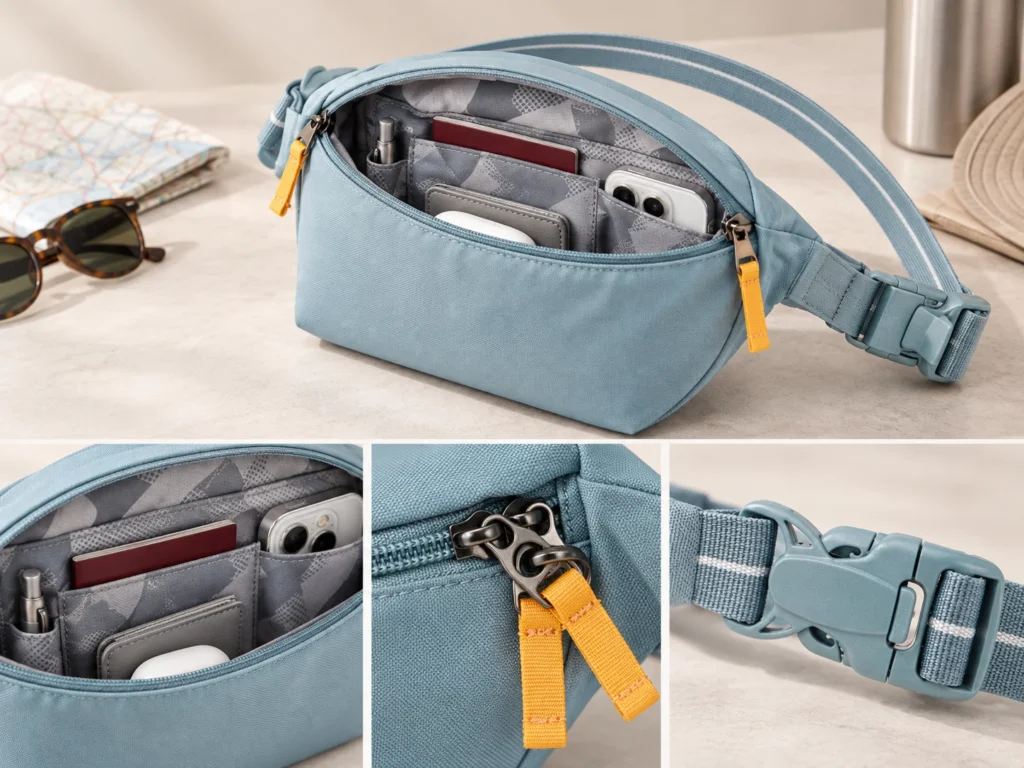
9. Utility or EDC Crossbody Bag
Utility and EDC bags are designed around everyday organization rather than a clean, minimal silhouette.
They may include several zipper compartments, front pockets, webbing details, internal organizers or small attachment points. Polyester, nylon and Oxford fabrics are common choices for this kind of functional construction.
This category is particularly relevant to commuter, outdoor, travel and men’s everyday-carry ranges.
The main risk is feature overload.
Adding another pocket may look useful on a specification sheet, but every extra layer takes up space and adds components and sewing operations. If the pocket has no clear purpose, the finished bag can become thicker without becoming easier to use.
A better EDC layout starts with the actual items the customer expects to carry and builds the organization around them.
Other crossbody designs may include saddle bags, bucket bags, phone pouches and more fashion-led shapes. There is no need to force every design into one fixed classification. The useful question is whether the bag’s structure matches the way it is expected to be carried and used.
Crossbody Bag Types at a Glance
| Type | Typical Carry Position | Capacity Direction | Common Opening | General Structure | Common Use | Important Design Point |
| Mini / Compact | Hip / side | Small | Zipper or flap | Flat or shallow | Essentials / casual | Usable internal space |
| Camera | Hip / side | Small-medium | Top zipper | Boxy | Everyday | Shape retention |
| Flap | Hip / side | Small-medium | Flap / flap + zip | Soft to structured | Lifestyle / daily use | Flap proportion |
| Sling | Chest / back | Small-medium | Zipper | Curved / tapered | EDC / commute / travel | Strap anchor position |
| Belt / Waist | Waist / chest | Small | Zipper | Close-body | Travel / casual / sport | Strap range and body shape |
| Messenger | Hip | Medium | Flap / zipper | Wider rectangular body | Work / school / commute | Reinforcement |
| Convertible | Variable | Varies | Varies | Multi-position | Multi-use retail | Balance and hardware |
| Travel | Close to body | Small-medium | Multiple zippers | Organized | Travel | Pocket access |
| Utility / EDC | Chest / hip | Small-medium | Multiple zippers | Layered / functional | EDC / outdoor / commute | Pocket organization |
The table is useful for narrowing the starting point, but two bags in the same category can still be very different once the dimensions, materials and internal structure are changed.
How to Choose the Right Crossbody Bag Type
Choosing a style should start with what the product needs to do, not with a name taken from a catalog.
Start With What Needs to Fit Inside
The intended contents immediately narrow the options.
A phone, wallet and keys can fit into a compact crossbody. A larger daily load may require a messenger-style body, while travel items such as a passport, phone, charger and documents may be better divided across several pockets.
Trying to fit too many functions into a very small body usually creates compromises somewhere else.
Think About Where the Bag Should Sit
A low hip-level crossbody feels different from a sling carried close to the chest.
That changes the shape of the bag as well as the strap arrangement.
If the product is intended for quick access while walking or commuting, a high sling position may work well. If the user needs more space and carries the bag for longer periods, a wider messenger-style body may be more appropriate.
The wearing position should therefore be part of the brief before the strap and pattern are finalized.
Decide How the User Will Access the Bag
Opening style is easy to overlook during early design work.
A top zipper can be simple and efficient. A front flap changes both the appearance and the access sequence. A travel bag may need several openings because different items are used at different times.
The important question is not how many zippers or pockets the bag has.
It is whether the user can reach the right item without having to open several unrelated compartments first.
Match the Structure to the Product Program
There is rarely one “best” crossbody type.
A compact pouch may make sense for a simple, cost-conscious retail program. A sling can work better for travel or men’s EDC. Messenger-style products suit larger everyday loads, while convertible designs can add flexibility when multiple carrying modes are genuinely useful.
The right starting structure is the one that achieves the intended function without adding features the customer does not need.
You can compare existing custom crossbody and waist bag styles before choosing a starting direction.
What Makes One Crossbody Style More Complex to Manufacture?
Two crossbody bags with similar outside dimensions can require very different amounts of work.
The number of visible features is only part of the difference.
Body Shape and Number of Panels
A simple flat pouch can be built from relatively few main panels. Curved sling bags, shaped gussets and more structured bodies may require additional pattern pieces and more alignment during sewing.
That does not automatically make one construction better. It simply means the pattern and assembly are different.
Pockets and Zippers
Every additional pocket normally brings more than one new component.
There may be another zipper, pocket bag, lining section, binding or reinforcement piece behind it. A multi-pocket EDC bag can therefore involve considerably more operations than a clean crossbody with the same outside size.
Structure Inside the Bag
Outer fabric alone does not determine how firm the final product feels.
Foam, interlining, lining and reinforcement can all change the shape. A camera-style bag that needs to hold a defined box shape may require a different internal build from a soft travel pouch.
This is one reason a material cannot be selected only from a photograph.
Strap and Hardware System
A basic fixed webbing strap is relatively straightforward.
Once a product includes adjusters, detachable hooks, multiple attachment positions or a convertible carrying system, the hardware layout becomes part of the product development.
The hardware also needs to work with the intended load and wearing position.
Branding and Decorative Details
Printing, embroidery, woven labels, rubber patches and other logo methods can all be used on crossbody products, but the best option depends on the material, artwork and placement.
Branding should ideally be considered before sewing starts. Some logo positions become difficult or inefficient once pockets, lining or reinforcement have already been assembled.
For a broader view of materials, structure, logos and packaging choices, see our custom bag customization options.
From Crossbody Style to Production Sample
Once the basic style has been chosen, the next step is to turn the idea into a specification that can actually be sampled.
A reference image can help explain the general direction, but it does not answer everything. The factory still needs to understand the intended contents, approximate dimensions, carrying position, pocket layout, materials, strap system and branding requirements.
A useful starting brief normally includes:
- the reference style or sketch;
- what the bag needs to carry;
- target dimensions or capacity direction;
- preferred outer material;
- required pockets and openings;
- intended carrying position;
- logo method and placement;
- target order quantity.
The first sample is then used to check whether those decisions work together in a physical product.

A sling, for example, may look correct in a flat drawing but sit too low once loaded. A compact bag may have the right outside dimensions but an opening that is too narrow for the intended item.
These are the kinds of details that are much easier to identify during sampling than from a specification sheet alone.
You can also review our custom bag factory and production capabilities to see how sample review, sewing, assembly and inspection fit into the wider production process.
Frequently Asked Questions
Is a sling bag the same as a crossbody bag?
Not exactly. A sling bag is usually a more specific type of crossbody bag. It tends to sit higher and closer to the chest or back, with a compact body designed for movement and quick access.
A traditional crossbody bag can use many other shapes and often hangs lower around the hip. For product development, the difference matters because the carrying position changes the strap anchors, opening direction and balance of the bag.
Can a waist bag also be worn as a crossbody bag?
Yes, but the strap and body shape need to support both positions.
A longer adjustable strap may allow a waist bag to move onto the chest, but strap length alone is not enough. Buckle position, side wings, attachment points and body curvature also affect how the bag sits when worn crossbody.
If both carrying methods are required, it is better to define them before the pattern is finalized.
What is the difference between a messenger bag and a crossbody bag?
A crossbody bag is a broad category defined mainly by how it is carried, while a messenger bag is a specific bag style.
Messenger bags are usually wider, more rectangular and built for greater capacity, often with a long strap and front flap. They commonly suit commuting, work or school, while crossbody bags can range from small phone pouches and slings to camera bags and larger messenger-style designs.
Which type of crossbody bag is best for travel?
There is no single best type for every trip.
A compact crossbody works well when the user only needs a phone, wallet and passport. A sling is more suitable when close-to-body carrying and quick access are priorities, while a travel crossbody with several compartments makes more sense when documents, chargers and other small items need to stay organized.
Start with what needs to be carried, then choose the structure.
Choosing a crossbody style is really about deciding how the bag needs to work before deciding how it should look. A compact pouch, sling and messenger bag can all be worn across the body, but they solve different carrying problems. Once the starting structure is clear, later decisions about size, materials, straps, pockets and sample adjustments become much easier to judge.