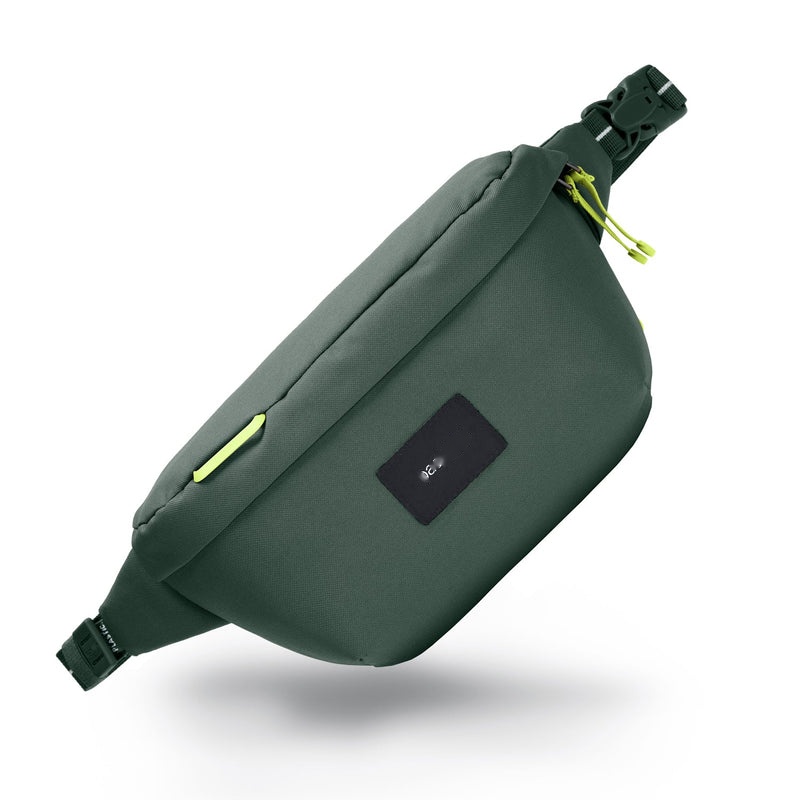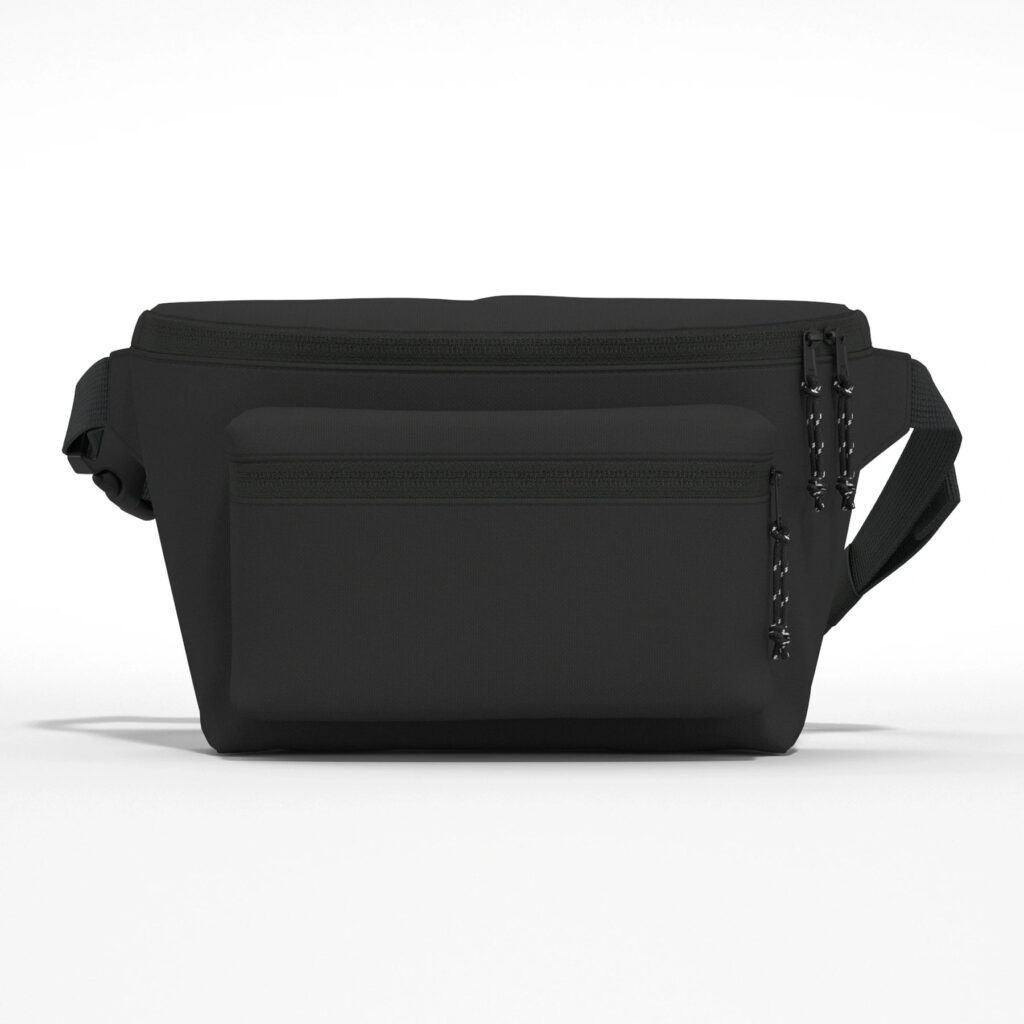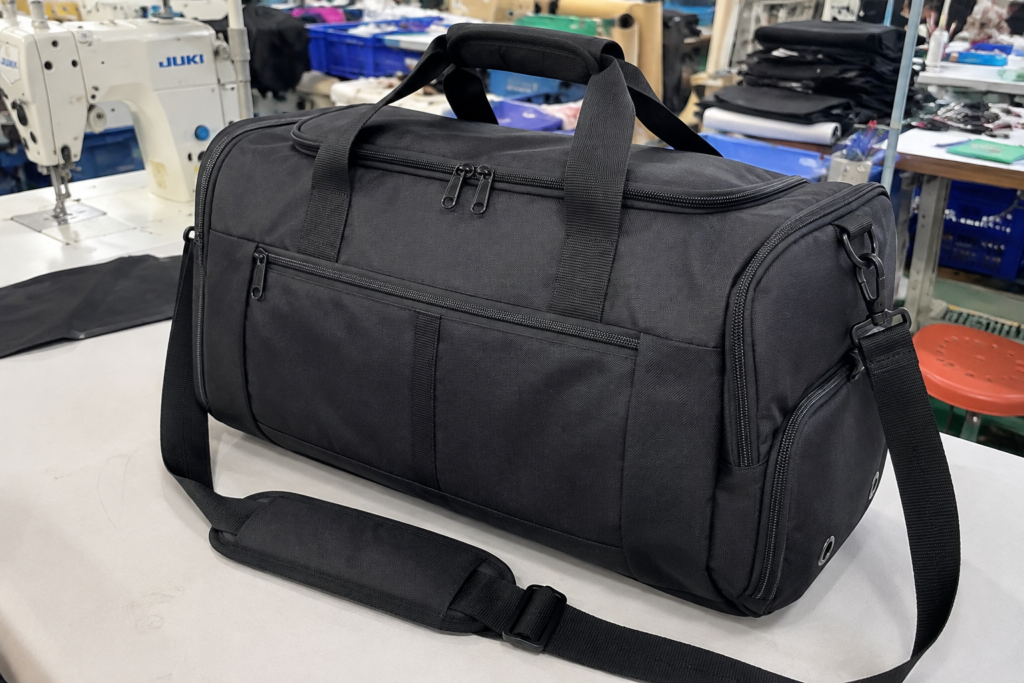
A custom shoulder bag manufacturer must translate material combinations, pocket layouts, hardware placement, branding details and packing requirements into repeatable production instructions.

Project at a Glance
| Project Detail | Specification |
|---|---|
| Product Type | Custom shoulder bag |
| Main Material | 1680D polyester |
| Selected Panels | TPU |
| Approximate Front Profile | 360 × 200 mm |
| Carrying Structure | Adjustable single shoulder strap |
| Storage Layout | Multiple zip compartments, side pocket and rear pocket |
| Functional Components | Combination-lock feature and USB pass-through |
| Custom Details | Front graphic treatment, custom zipper pullers, inside label and packing details |
| Current Stage | Bulk production in progress; formal delivery pending |
The Main Manufacturing Challenge
The difficulty of this project was not a single decorative detail. The bag combined several materials, compartments and functional components within a relatively compact body.
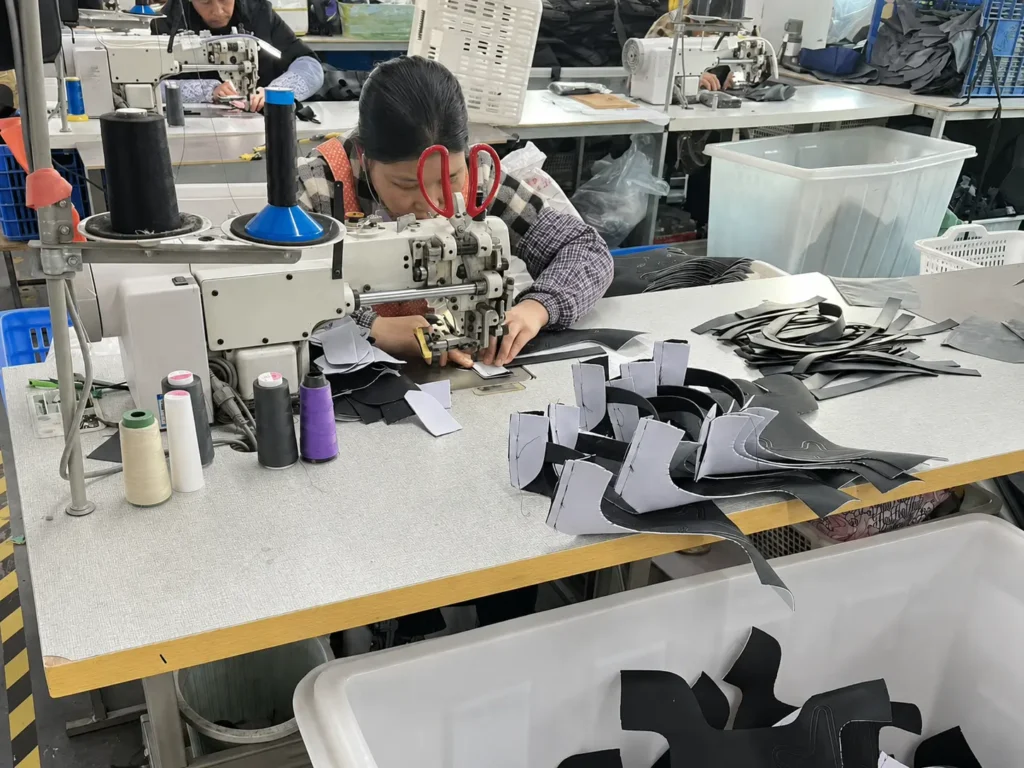
A specification may show the required dimensions and component positions, but the factory still needs to convert those instructions into workable cutting, sewing and assembly steps. If this is not resolved before bulk production, small differences can appear in pocket alignment, zipper access, strap positioning or the fit of external components.
For sourcing teams, the important question is therefore not only whether a supplier can make one sample. It is whether the construction can be repeated consistently during bulk sewing and assembly.
Combining 1680D Polyester With TPU Panels
The main body uses 1680D polyester, while selected areas use TPU panels to create a different surface and visual structure.
Combining these materials requires attention to the edges where the panels meet. The sewing operation must control alignment and material movement so that the TPU sections follow the intended shape without affecting the surrounding fabric.
Before bulk production, the material specification and panel placement were translated into individual cutting and sewing requirements. This gave the production team a clearer reference for:
- Identifying the correct material for each panel
- Controlling the position of TPU sections
- Maintaining the intended front profile
- Keeping seam placement consistent around material transitions
For buyers developing a bag with mixed materials, it is useful to confirm more than the general material name. The specification should identify which panels use each material, the required surface treatment and how the materials should meet at the seams.
Organising Multiple Compartments in a Compact Bag
The shoulder bag includes multiple zipper compartments, a side pocket and a rear pocket. Each compartment adds sewing operations, but it also affects how the finished bag is used.
Pocket dimensions cannot be considered separately from zipper opening length, seam allowance and the space occupied by the lining. A pocket may look correctly positioned on a drawing but still be difficult to access if the opening is too short or another component restricts the zipper path.
During production preparation, the compartment layout was broken down into separate assembly steps. Particular attention was given to:
- Zipper position and opening direction
- Pocket alignment on the main body
- Space between adjacent compartments
- Lining and seam allowance inside each pocket
- Accessibility after the bag is fully assembled
This is especially important for a compact sling or crossbody structure because there is less room to absorb positioning differences than on a larger travel bag.
Integrating the Combination Lock and Zipper Pullers
One side of the bag includes a combination-lock component designed to work with the zipper pullers.
These parts need to be treated as one functional system. The position of the lock affects the zipper path, while the shape and length of the zipper pullers affect whether they can engage with the lock as intended.
Before repeating this structure in bulk production, the relevant points include:
- Lock position on the side panel
- Zipper closing direction
- Puller dimensions and orientation
- Clearance around the locking area
- Ease of engagement after the bag is assembled
For buyers requesting security hardware, confirming the lock model alone is not enough. The zipper, puller and attachment position should be evaluated together during sampling.
Adding the USB Pass-Through Component
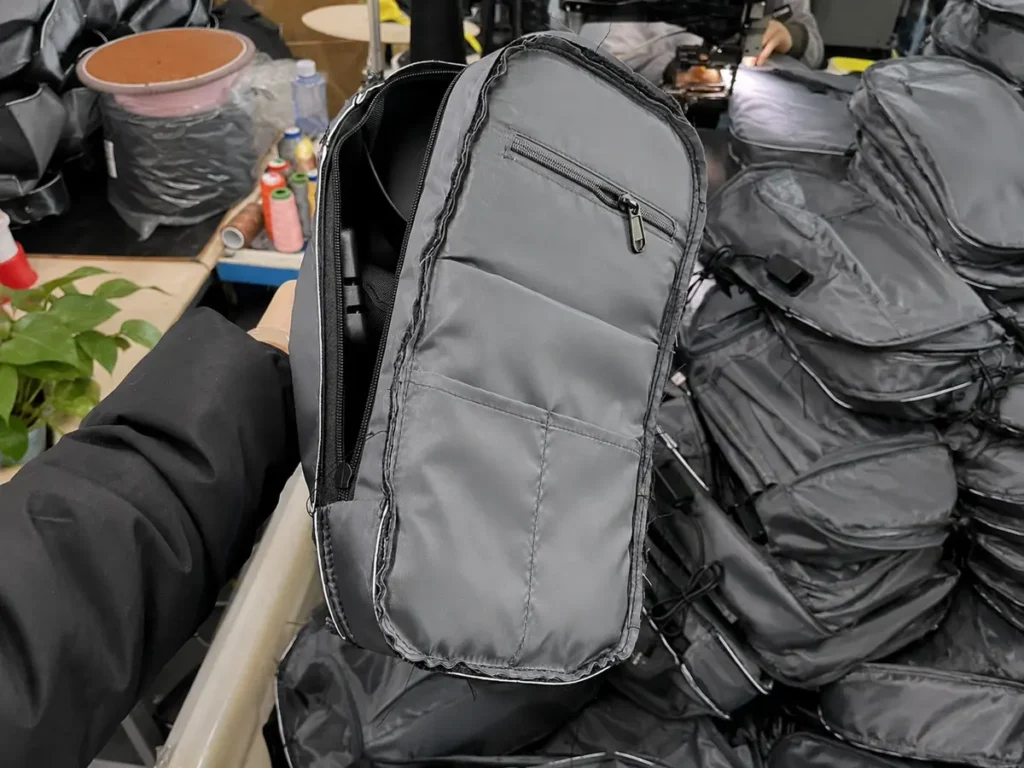
The bag also includes a USB pass-through component. Although it occupies only a small area, it affects several construction details.
The opening must be positioned correctly on the panel, the component must be secured during assembly, and the internal access point must remain usable after the lining is installed. Its location should also avoid interfering with pocket seams or other hardware.
For similar OEM shoulder bag projects, the buyer should confirm:
- The selected component model
- External and internal placement
- Required opening dimensions
- Reinforcement around the installation area
- Relationship with the lining and internal pocket layout
Confirming these details early reduces the risk of changing panel patterns after production materials have already been cut.
Managing Custom Branding Components
The project includes a custom front treatment, a three-dimensional silicone graphic, custom zipper pullers and internal labelling.
Different branding methods affect production in different ways. A front graphic influences panel preparation, while a custom zipper puller must remain compatible with both the zipper slider and the combination-lock structure. Internal labels and hangtags need confirmed placement and orientation before packing begins.
The production file therefore needs to identify:
- Artwork version and dimensions
- Colour and surface requirements
- Placement relative to seams and pocket openings
- Orientation of internal labels
- Matching components for each part of the bag
- Packing sequence for labels and accessories
For a custom shoulder bag manufacturer, these controls are necessary because branding components are not simply added at the end. Many of them affect panel preparation or assembly order.
Moving From Specification to Bulk Sewing
Once the material, structure and component relationships were defined, production moved into panel preparation, sewing and assembly.
The sewing sequence needs to account for the fact that some components must be installed before the bag body is closed. Other parts, including external hardware and zipper pullers, can only be checked properly after related panels have been assembled.
Production-stage checks focus on visible and functional points such as:
- Material and colour matching
- Panel and pocket alignment
- Stitching around material transitions
- Zipper movement
- Strap attachment and adjustment
- Lock and zipper-puller engagement
- USB component installation
- General shape after assembly
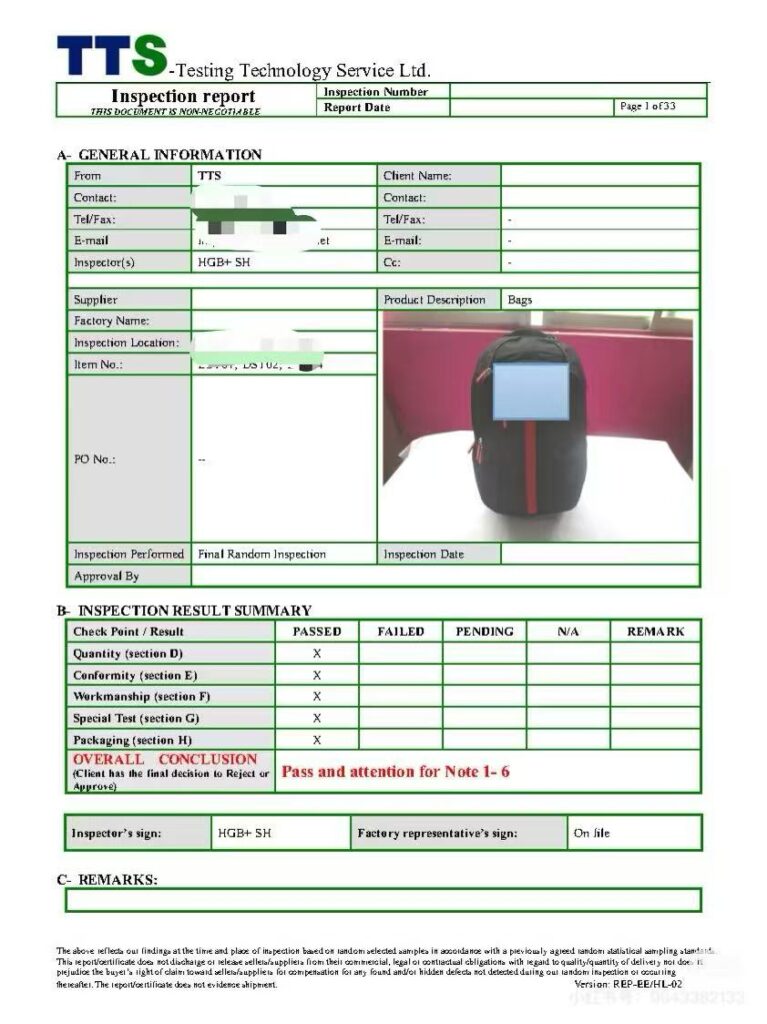
These checks support production control, but they are not presented as a completed final inspection. The order is still in progress and has not reached formal delivery.
Packing Preparation Without Exposing Order Information
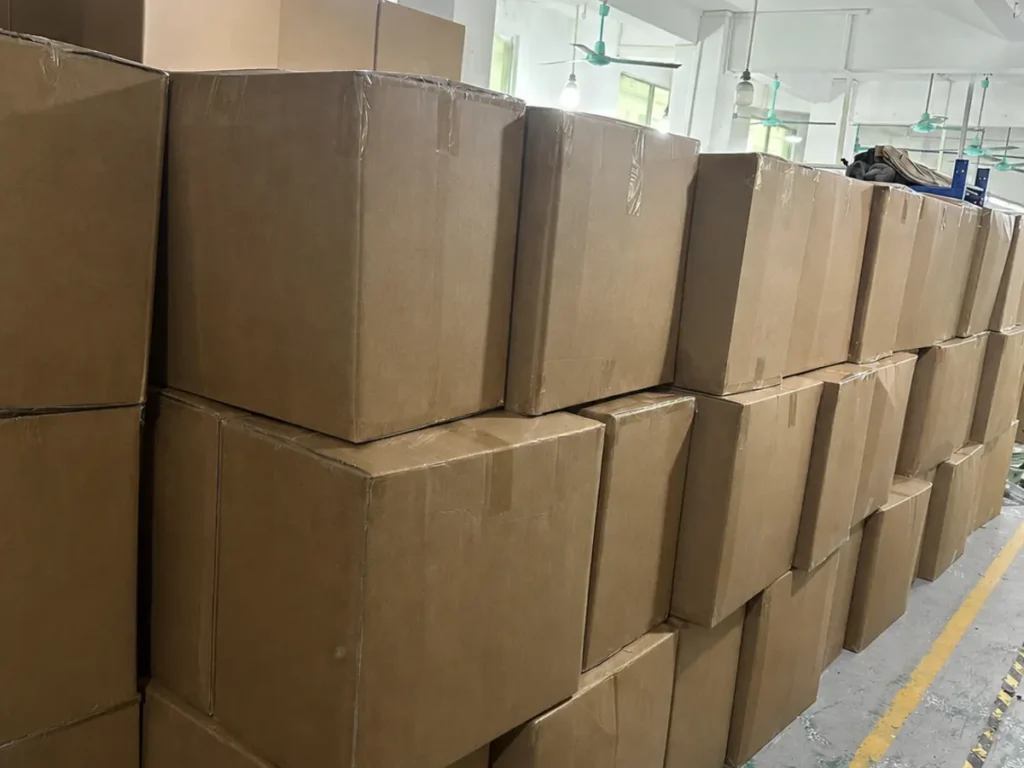
Packing preparation includes checking the finished bag presentation, folding method, individual packaging and carton arrangement.
Labels, barcodes, order references and shipping details may be necessary for production and logistics, but they are commercially sensitive. They should remain in the internal production file rather than being displayed in a public case study.
The public images for this case therefore focus on the bag construction, sewing process and packing stage while removing identifying order data and unrelated branding.
For buyers, the practical lesson is to provide final barcode, label and carton-mark files before packing starts. Late changes at this stage may not affect sewing, but they can delay packing and shipment preparation.
What Buyers Can Learn From This Project
A detailed custom shoulder bag should be reviewed as a complete system rather than a collection of separate options.
The main points to confirm before bulk production are:
- Specify the material used for every important panel, not only the main fabric.
- Review pocket access after accounting for lining and seam allowance.
- Test related components together, such as the zipper pullers and combination lock.
- Confirm functional component placement before cutting bulk materials.
- Define branding orientation, dimensions and placement in the production file.
- Complete barcode, label and packing information before the packing stage.
- Separate production-stage checks from the final pre-shipment inspection.
These decisions help reduce avoidable changes after cutting and make it easier for the production team to reproduce the intended construction.
Frequently Asked Questions
What information should a buyer provide for a custom shoulder bag?
A useful specification should include dimensions, panel materials, compartment layout, strap construction, hardware, zipper direction, logo artwork, label placement and packing requirements. Reference samples or annotated drawings can help clarify how the bag should function.
Can the pocket layout and shoulder strap be customised?
Yes. Pocket dimensions, zipper openings, strap length, adjustment hardware and attachment positions can be developed according to the project. These details should be confirmed through the sample and production specification before bulk cutting.
Can security hardware and USB components be added?
Combination locks, compatible zipper pullers and USB pass-through components can be incorporated when the surrounding panel construction allows it. Component models and installation positions should be confirmed before production.
Why should custom components be confirmed before bulk production?
Custom pullers, labels, silicone graphics and functional hardware may require separate preparation. Their dimensions and installation methods can also affect panel patterns or assembly order. Early confirmation reduces the risk of production delays or component mismatch.
What should be checked during bulk production?
Relevant checks may include material matching, panel alignment, stitching, zipper movement, strap attachment, component installation and packing preparation. The exact inspection scope should be agreed according to the product specification and order requirements.
Discuss Your Custom Shoulder Bag Project
If you are evaluating a custom shoulder bag manufacturer for a sling bag, crossbody bag or compact shoulder bag project, send us your reference images, drawings or product specification.
Annabelle Bag can review the material combination, pocket layout, strap construction, branding methods, functional components and packing requirements before sampling or bulk production.
More Project References Are Available on Request
To protect confidential commercial and production information, some project details and images are not published in full. If you would like to review additional case materials or discuss references relevant to your bag project, please contact Annabelle Bag. Further information can be shared where appropriate and subject to the applicable confidentiality requirements.